Sunday, January 22, 2023

New Year Nonsense: Tales of a newly-married person in early old age

 Changing Your Life In January

Like many people, I make the same new year resolution every year: eat more healthily, lose weight, get fitter. And every year I reach the following Christmas fatter and more unhealthy than ever.

            They say that doing the same thing repeatedly, but expecting a different outcome, is a sign of, at best, irrational thinking – at worst, madness. So, I must be stark staring bonkers by now.

            Of course, there are people out there who make new year resolutions and then stick to them. There must be armies of smug, self-satisfied people at this moment living off boiled vegetables and steamed fish – running, cycling, swimming and going to the gym on a daily basis – eschewing alcohol in favour of meditation and kale smoothies – helping out at the local food bank – spending an hour or two each day painting, practicing the piano or learning to speak another language.

There are presumably even some who  (unlikely as it may seem) have been working hard on their novels since January 2nd.

By midsummer, we should see these people everywhere – flat-bellied, firm-thighed, clear-skinned, shiny-haired people, looking happy, healthy and contented as they jog past us down the canal path or take T’ai Chi classes in the park. Smiling people, glowing with the knowledge that, through regular hard toil since the new year, their credit card bills are fully repaid, they’re fluent in Esperanto and, if called upon to perform a Latin American dance routine, they’ll be able to rise to the occasion.

These are the people with will-power, the forward-thinking, those who believe in themselves, who can make a commitment in January in the certain knowledge that they can stick to it for the rest of the year.

The grown-ups, if you like.

Do you actually know any of these people?

I can’t say I do. I know people who’ve always been self-disciplined and forward-thinking, without the need to make a new year resolution out of it. But most people I know are like me – their new year resolutions carry them through the cold post-Christmas weeks on a tidal wave of smug enthusiasm before gradually dissipating in February’s fug of inevitable hopelessness.

New year resolutions are often so unrealistic, aren’t they? When I was a teenager, I used to resolve to do all manner of things that, in retrospect, were quite out of character and unlikely to be maintained for more than a week. These included vowing to return my library books on time, determining that I would rise at six every morning and do an hour of aerobics before breakfast, promising myself that I would play with the dog for an hour every day or that I wouldn’t lose my temper – all things I knew deep down I was inherently unlikely to achieve. It was wishful thinking rather than proper resolution-making.

The experts say you have to resolve to do things that are achievable and won’t end up leaving you feeling like a failure by March. So my resolutions this year are:

1.     I will eat a scone, flapjack or almond croissant only five days out of seven;

2.     I will complete a Silver Sneakers fifteen-minute exercise video for the over-50s maybe once a week, if I feel like it;

3.     I will cut down the amount of time I waste looking at Facebook, ‘researching’ actors I’ve seen in the background of Netflix serials whose faces look familiar, or watching YouTube videos of funny cats, down to, say, six hours a day.


Having a Night Out in your Fifties

 The other problem with new year resolutions is that sometimes they turn out to have disappointing results. One of mine this year was to go to the theatre more often, and so, with this in mind, I bought two tickets for us to see ‘Girl From The North Country’, a critically-acclaimed musical play written and directed by Conor McPherson and featuring the music and lyrics of Bob Dylan. My husband is a massive Dylan fan and it was close to his birthday so it seemed like a great way to get started on this particular resolution.

          We haven’t been to the theatre since before Covid, and theatre seats must have shrunk in the interim (possibly as a money-saving measure), because my seat seemed exceptionally small. We were at the end of a row which meant we had to stand up about six times to allow other members of the audience to get to their seats. I did this in a good-natured way at first, but when a tardy couple arrived just as the show was starting, I gave them the benefit of a very hard stare, which the man definitely spotted because he stumbled and nearly dropped his plastic cup of lager on a woman’s head.

To be honest, despite feeling as if my hips were likely to pull the chair out of its moorings every time I rose to my feet, standing up was a bit of a relief as the woman next to me spent the entire performance (and pre-performance) jiggling her leg up and down roughly in time to the music – her leg was pressed right up against me and, to be honest, I’m not even keen on social hugging with friends so, for me, this was far too intimate a body contact with a stranger.

            We hadn’t had time for an evening meal and my husband was ravenous when we arrived. He bought a tube of Pringles and a family pack of Twirl Bites from the kiosk in the foyer and ate them in the auditorium before the play began. Neither of us has ever, since childhood, eaten more than an occasional interval ice-cream in a theatre auditorium before, and at one point I glanced at him and realized he was still wearing his woollen beanie hat as he scooped sweets into the gap in his beard where his mouth is, with industrial efficiency. He looked like a homeless man I was taking for an outing. But at least he finished the crisps before the performance began.

            What can I say about the play? It has been universally praised by critics and audiences. I like Bob Dylan’s music. The singers were good. Dylan himself had given it his seal of approval. So I feel uncomfortably like the small boy who laughs at the Emperor’s New Clothes as I say this – I thought it was absolutely dreadful. I can hear people baying for my blood even as I type…

Set in 1934, in a run-down Minnesota guesthouse housing misfits and lame ducks, it was cliché-filled sub-Steinbeck gibberish, as far as I could see. There was a landlord who had experienced a tragedy in his childhood which actually made me want to giggle every time it was mentioned (because I’m a heartless bitch, obviously) which made him apparently unable to love anyone. Nevertheless, he seemed to be the most emotionally stable of the characters, and cracked several jokes, all of which seemed too modern for the period and too unoriginal.  There was a couple with an adult child who had ‘the mind of a four year old’ and ‘didn’t know his own strength’. This son had killed or hurt a woman in the past – his father eventually had to kill him and pretend it was an accident (at least this was how I read it). Of Mice and Men anyone?  The landlord’s wife was suffering from alcohol-induced dementia (I only know it was alcohol-induced due to the programme telling me) but, though she talked a lot of incoherent nonsense, she also made some pronouncements that were clearly intended to be profoundly wise. How often does that sort of thing happen in plays, eh? The daughter of the family was pregnant, with a phantom pregnancy according to the doctor, but apparently she turned up with a baby later. Maybe it was meant to suggest the second coming of Christ? There was a subplot which felt straight out of Fiddler On The Roof about an old man, who bore an uncanny resemblance to Lazar Wolf, who wanted to marry this poor nineteen-year-old girl. There was a black boxer who had been – wait for it – imprisoned for a crime he didn’t commit – who reminded me very much of a character from Little House On The Prairie. There was even a grifter pretending to be a bible salesman – all he needed was a little girl and it would have been Paper Moon. And I couldn’t see the dramatic point of the son, Eugene, at all.

            The characters intermittently burst into song, for no good reason, though this is a feature of musicals that you have to accept, obviously. I like Bob Dylan’s music, and the auditorium was obviously full of big fans – for instance, the woman who was rubbing her leg up and down mine throughout the performance was singing along at several points too, which added nothing to my enjoyment of the show. However, there should have been more of the more recognizable songs, for the non-‘Dylan fanatics’ in the audience – ‘I want you’, ‘Like a Rollin’ Stone’ and ‘Forever Young’ were there, a little burst of 'Make you feel my love', but most of the rest were unfamiliar to me and sounded dreary and forgettable. I listened to the words of some of them and, though I’m sure this will be considered as sacrilegious as saying you’re not fond of Granny Weatherwax on a Terry Pratchett Facebook page, I was surprised by how dull and predictable the lyrics were – I mean, the man won the Nobel Prize for Literature a few years back, didn’t he? But still, the music was generally good, and the evening would have been vastly more enjoyable had it just used the cast, who were all good singers, singing a selection of Dylan’s best songs, rather than weaving them into this dire play.

            I wasn’t entirely alone in my judgement. The four people in front of us didn’t return after the interval. A friend of my husband who happened to be there the same evening with his family texted him afterwards to say that they thought it was ‘incoherent rubbish’. But the audience gave it a standing ovation at the end and my husband claimed he enjoyed it. Another of his friends has seen it twice, such is his admiration for it.

            Due to the aforementioned hunger, we decided to stop off and grab a burger from KFC on the way home. Neither of us has been to a fast food place for around two decades, except to take my great-nephew to Macdonalds occasionally, and so this was very out-of-character for us. As we pulled into the forecourt, it felt like we were going to have an illicit treat, though it didn’t turn out to be much of a treat in the end. We used the drive-through as the restaurant itself was shut. As it is so long since we went to a KFC, we needed time to look at the menu board – and as our eyesight is so bad, we had to get right up to it before we could see it. So we would have held up the queue, had there been one. Fortunately, there wasn’t. I said I’d have a ‘trilogy box meal’ out of sheer panic. When I asked whether it was intended for one person or more, the question seemed to send the disembodied voice of the girl who took our order into a paroxysm of irritation. When asked what ‘side’ I wanted, not knowing what ‘sides’ they actually did, I blurted out ‘coleslaw’ in a weird voice, and I could feel the girl was thinking ‘Bleedin’ old people!’ as she told us to drive on to the next window. I was disappointed to discover that they only do zinger chicken burgers now. On those odd occasions when I had one, in my younger days, I used to like their straightforward chicken burgers with the colonel’s southern fried spices. The ‘popcorn’ chicken tasted neither like chicken nor popcorn – the closest I can come to describing it would be to ask you to imagine chunks of polystyrene fried in gluey American Tan-coloured breadcrumbs. The fries weren’t really fries but closer to nasty, soft, flavourless chips. There was no ketchup, though we’d asked for it. The burger itself, and the mini fillet, were however pretty good, though the Pepsi Max was hideous, and the coleslaw tasted like it was made primarily of vinegar.

            I was desperate to go to the loo but the restaurant itself was shut so we ate in the car and I staved off the bladder pangs by wriggling a lot and continually banging my foot against the fascia, much to my husband’s consternation. Despite there being numerous parking spots in other places, he felt it was a good idea to park close to a suspiciously anonymous-looking car with its engine running and its lights on. The man in the driver’s seat wore a baseball cap pulled low over his haggard features. He wasn’t eating anything but was talking animatedly on his mobile phone. At one point he got out of the car, walked round it in an aggressive manner, talking on the phone all the while, a cig hanging out of the corner of his mouth, glancing suspiciously at us every now and then, before getting back into the car, slamming the door, and soon afterwards leaving the car park, He was closely followed by three other anonymous-looking cars, each driven by a similar man. Their departure, all coming from different parts of the car-park at the same time and following the first car like a vehicular formation dance team, gave the impression that they had been triggered by the first man’s decision to leave.

Now, he might have simply been some innocent bloke who just needed a brief rest on his journey home from a perfectly legitimate place of work (husband’s interpretation), but to my eyes he looked like a drug-pushing gang-member. And the three baseball-capped men with neck tattoos who followed his car might well have been innocent bystanders who’d just been stopping off in the car park for a quick bargain bucket (husband’s interpretation) rather than other gang members and one undercover police officer, which was my opinion.

And I bet, to them, we looked like a couple of ageing idiots staring blankly at them (well, my husband was) as we munched on our zinger burgers, lettuce falling into our laps, occasionally bickering about whether there were any napkins and if so where were they, the woman wriggling constantly in a weird way….




Friday, January 20, 2023

PUBLICATION NEWS

 My poem 'In The Flesh' was accepted for publication in the February 2023 edition of The Avenue, whose theme is 'anticipation'.

Thursday, January 19, 2023

BOOK REVIEWS: What I've read since last time

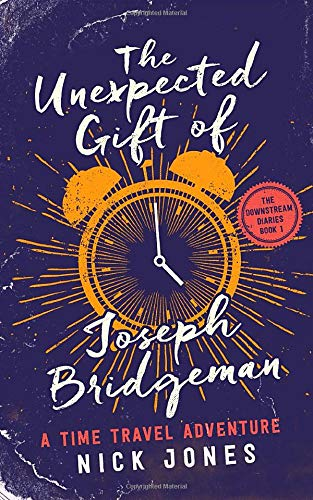
 And Then She Vanished: Joseph Bridgeman Book 1 by Nick Jones

Or, as I know it, The Unexpected Gift Of Joseph Bridgeman [first book in Downstream series by Nick Jones]


I downloaded this novel several years ago and came across it just before Christmas while idly scrolling through the library on my Kindle. Having nothing better to do, I thought I'd give it a go. It's a time-travel story, and reading it had a peculiar time-travel aspect to it: I was absolutely certain that I'd never read it before, but the further I read the more I started doubting myself and thinking I had read it before after all. I held these two contradictory thoughts in my head simultaneously throughout the read, but it wasn't a simple case of thinking 'Oh, yes, I remember that bit, I've definitely read it before' - for example, I kind of 'remembered' the gist of the denouement a few chapters before it happened, but I couldn't recall any of the details, and nothing in the early part of the book had jogged my memory about the ending. Even while I was reading about events that made me feel I had read them before, I was still pretty certain I hadn't.
            I can only conclude that either I had read it before but had forgotten it, or I am going slightly bonkers, or I had at some point in the future time-travelled back to the past and read it so that, in effect, this current reading was my first reading but it was being affected by a previous reading that hadn't happened yet.....
            Yes, time-travel stories always get a tad silly, don't they? I mean, why doesn't Dr Who just travel back to a point before all the bad things happened and stop the initial event? But, you have to suspend your disbelief - or just don't read time-travel stories.
            This particular one, the first in a series, seems to have changed it's title since I first downloaded it, as, when I looked on Amazon today, And Then She Vanished was all I could find. This is a pity as The Unexpected Gift Of Joseph Bridgeman is a much better title, in my opinion. In fact, it was the title which attracted me to the book in the first place. And Then She Vanished would definitely not have caught my eye in the same way.
            Anyway, it is the tale of Joseph Bridgeman,  a young American man who tells his own story. As a teenager, his much younger sister vanished in a fairground and was never recovered. She is assumed to have been abducted and killed. This led to further tragedy in the life of the Bridgeman family and, when the novel opens, Joseph is a mess - broke, increasingly dependent on alcohol, seriously depressed. He is persuaded to have therapy but when his therapist, Alexia Finch, teaches him some self-hypnosis skills to help him sleep, he discovers he can time-travel, and he decides to go back in time to save his sister. Of course, it isn't as simple as that.
            Joseph's narrative voice is cynical, wry, occasionally irritating but generally engaging. The plot does a fair bit of twisting and turning. Characterisation is pretty good. The story is quite compelling. Notice my qualifiers - this is not a bad book. In fact it is quite good, of its kind. But it's not a book that will change your life or leave you in a quiet state of thoughtful re-evaluation of all you thought you knew. It's well-written but not brilliantly-written. It's one of those books than is better than 'so-so', but not as good as 'bloody fantastic'.  If you enjoy it, you have the opportunity to read more in the series. However, though I enjoyed reading it, I didn't feel any particular urge to read the next book. Maybe one day.

***  better than 'so-so' but not as good as 'bloody fantastic'


'The Ordeal of the Haunted Room' (short story in Chronicles of St Mary's series) and 'Santa Grint' (short story in Time Police series) by Jodi Taylor


In their constant attempt to extract every penny from successful novel-series, these days publishers often expect their popular writers to write short stories based in the world of their popular fantasy series and featuring the same characters. Hence, Ben Aaronovitch's numerous spin-off short stories from his Rivers Of London series. In Aaronovitch's case, he also produces graphic novel stories as well as short tales, and while they are all very good they do often add information to the central story which can really annoy readers who just want to read the novels. 
                Nevertheless, you can see the appeal of such short stories. Readers of series often feel almost 'addicted' to the novels and are very willing to pay over-the-odds for a short story to tide them over until the next novel comes out. A short story might be sold for what seems like a small amount of money but, if you compare it with the price of a full book in terms of cost per word I suspect they actually cost more than the full novels. But they have a guaranteed readership of fans and don't require as much time and effort on the part of the writer.
                Jodi Taylor has become a very successful writer due to the popularity of her Chronicles of St Mary's novels and it's spin-off Time Police series. The short stories she has written are generally very entertaining, often feeling like extra chapters of the episodic sagas themselves. Many are set at Christmas so they have become something of a tradition. Sometimes they provide closure, tying off loose ends. My favourite one of this kind is the one where Max and Matthew go back to visit the horrendously-treated Victorian chimney-sweeps with whom Matt spent his early years, and change their lives for the better. 
                'The Ordeal Of The Haunted Room' was more of a Sherlock Holmes type story but with added mayhem due to the presence of the terrible trio, Max, Peterson and Markham. I found it amusing, page-turning and with a fairly interesting and unexpected resolution, certainly a perfectly pleasurable and undemanding read. As so often happens, one of the trio is badly hurt (Peterson, this time - broken ankle), Max loses her temper, and Markham saves the day. 
                'Santa Grint' does the same job for the Time Police series, taking the Time Police's most macho officer, pairing him with his putative and highly unlikely girlfriend Jane, and putting them in the middle of a classic Time Police tale involving time-criminals, rogue scientists, time-bubbles and Luke Parrish's father's virtually all-powerful shady business. Add an endearing and very sticky small boy, and you have an engaging Christmas story, complete with the obligatory humorous verbal exchanges between Commander Hay and her adjutant Farenden.
            My husband rarely reads novels. He prefers books on the social sciences. But I have got him interested in Taylor's Chronicles of St Mary's and he is really enjoying them. He sometimes can't wait to get back to them, and it means we can for once discuss a shared reading experience!  So this alone is enough to make me recommend her writing to you if you like a good story with a large dose of humour.

**** Great to read before bed


Strangers On A Train by Patricia Highsmith


I have a confession: I've only read three chapters of this novel so far. It did, however, make me re-watch the famous Hitchcock film version, so this review will be about that really! I noticed straight away that the film makes significant changes to Highsmith's story, as the protagonist, Guy Haines, is a tennis player in the film whereas he is an architect in the novel.
          I have always felt that it is a pointless activity to compare film versions to their original novels, as the two media are so very different from each other. I will admit that personally, despite being a massive Lord Of The Rings fan as a young person (I read it nine times, I think), I thought the three Peter Jackson films were actually better than the original novels, despite the fact that they missed out several episodes such as the Tom Bombadil stuff and the Scouring Of The Shire. There is no way that the battle scenes could be as dramatic, exhilarating, horrible and moving in words on a page as they were on the big screen. Some films expertly capture the spirit and atmosphere of the books on which they are based. The films based on the Narnia books do this pretty well, I've always thought, particularly The Voyage Of The Dawn-Treader. However, some don't, however true to the 'facts' in the original texts. For instance, I've yet to see an animated version of Watership Down that captures the poignant magic of that wonderful novel, and most film versions of Terry Pratchett's Discworld novels have been dreadful (Going Postal made a good stab at it) - yet the recent Night Watch series, based loosely on the Pratchett characters in the City Watch books but taking massive liberties, actually worked very effectively, I thought. I have heard many people complain about the way Lady Sybil is no longer an overweight posh woman in wellies who is verging on middle-age, and instead is suddenly a gorgeous young black woman, or how the dwarf Cheery Littlebottom is suddenly a transgender person of normal height. But despite these significant changes, I thought the series distilled the essence of the novels and, more importantly, was genuinely entertaining and coherent for non-Discworld fans. Films aren't novels, and they aren't made just for the fans of the novels on which they are based.
            Obviously, Strangers On A Train isn't a fantasy in the same way that the Narnia books or LOTR are - it is only a fantasy in the way that any crime thriller in the essentially realistic style is. But it is still true that things that work on the page don't always work on screen, and making Guy Haines a tennis player rather than an architect gives Hitchcock the opportunity to create a long, tense sequence in which Haines plays a match which he has to finish quickly so he can reach his nemesis in time to prevent himself being accused of murder. I can see why Hitchcock made this change, though actually I found that tennis sequence one of the weakest in the film. I haven't read enough the novel to know how far the film as a whole differs from Highsmith's story, so I can only give my thoughts here on Hitchcock's movie.
            I have to say up front that I love Alfred Hitchcock's films. Yes, he had his flaws. I love a bit of melodrama but it does occasionally become irritating in his films. They haven't dated particularly well, but Hitchcock had such a distinctive and original style that they are definitely still worth watching, just as Patricia Highsmith's books themselves are generally considered to be still worth reading. My favourite Hitchcock films are The 39 Steps and The Lady Vanishes, very closely followed by Marnie and The Birds (also based on a terrific story by a wonderful writer, in this case Daphne Du Maurier, though it is changed significantly). I don't like Psycho and have never been able to watch the whole thing, though I can see why it's so justly admired. Strangers On A Train is one of those wonderful later black-and-white movies that are stuffed full of Hitchcockian set-pieces. Farley Grainger as Haines and Robert Walker as a very creepy Bruno are both excellent. The cinematography has lots of those typically-Hitchcockian moments that teeter precariously between brilliantly original and comically ridiculous, just managing to stay on the right side of the line. The use of light and darkness is brilliant, whether it is the shadows outside Guy's house when Bruno appears behind the park gates at night or the moonlight rippling over the night-time lake near the fairground where Guy Haines's first wife is strangled by Bruno. There are some distinctive Hitchcockian moments such as the murder of Miriam being seen reflected in the lenses of her fallen glasses. Hitchcock builds the suspense through delaying tactics such as the tennis match and Bruno's accidental dropping of the incriminating gold lighter down a grating and having to retrieve it. This is effective but is also slightly contrived, which I personally can live with, but I can understood those who can't.
            The climax of the action, at the fairground carousel, is justifiably famous, if rather implausible, and probably coloured my long-held dislike of up-and-down-horses (I almost certainly saw the film as a child but had forgotten the details). The way that Hitchcock ramps up the tension while also showing a deeply unrealistic fight between the protagonist and antagonist, and police officers who seem astonishingly incompetent, and also slipping in moments of humour to break and therefore extend the tension is magnificent. Hitchcock moves effortlessly from mood to mood, style to style, cliche to cliche. A woman in the crowd screams 'My little boy!' and has to be held back as she tries to reach the out-of-control roundabout, and then the scene cuts to the little boy laughing with pure excitement and glee as he clings to the back of a wildly careering painted horse. Next moment, the same little sub-plot transforms into horror as the boy is pushed off the horse by the fighting men and ends up clinging to the side of the spinning carousel, about to be flung to his doom, but then Haines scoops him up and places him safely in a carriage before continuing with his fight with Bruno!  The horses' hooves rising and falling, making us think that any moment they will trample over one of the two fighting men as they roll around on the spinning floor, are iconic. This tension is both undercut and increased by the shots of a little old fairground employee crawling desperately beneath the out-of-control ride in an attempt to reach the controls and turn it off. And of course when he does so, the carousel collapses spectacularly, presumably causing many injuries, and killing Bruno, but not before he tries unsuccessfully one final time to frame Guy. 
            And as Guy walks off with the carny who recognised Bruno was the killer, the man asks him who Bruno was and Haines replies 'A very clever man'. I have no idea yet whether Bruno actually is clever or whether Highsmith's novel contains these words, or even whether Guy survives in her original novel, but I intend to read on and find out.  I'm guessing the novel doesn't have the fairground scenes, and I'm suspecting that in the novel Guy does carry out his part of the tacit bargain he made with Bruno on the train. But I might be wrong. 
            I decided to read the novel because I loved the film version of The Talented Mr Ripley, another of Highsmith's novels, and I've read and enjoyed several of her short stories, so I decided I should read at least one of her well-known novels. By many accounts, Highsmith was a rather unlikeable woman as she got older - rather reclusive, racist, anti-feminist, snobbish - but critics seem to agree that she was a writer worth reading. So, I began with this rather intellectual motivation, to broaden my reading of 'proper literature', which led to my revisiting a highly-enjoyable Hitchcock film, which in turn led me back to the novel. Novels have the advantage of giving you a lot more detail than a film - you can go inside the thoughts of the characters, discover their backstories and motivations more fully, and have better explanations of complex plot devices.  
            I did discover something from watching Hitchcock's film, however, beyond spotting the maestro's famous cameo appearance (getting on a train while carrying what looks like a double-bass). There is a moment in Seth MacFarlane's Family Guy where Peter says 'Criss- cross' in a meaningful voice, and I've always wondered what this alludes to. It turns out it's what Bruno says several times to Guy in the film, and we also see railway lines criss-crossing several times. Wonder if that's in the book?

UPDATE 24 January: I have now read the book. It is significantly different from the film, and Patricia Highsmith has a way of describing psychopathy and the effects of guilt that is quite distinctive. Her writing is detailed and literary, but I never felt close to the characters while reading. It was quite compelling, however, and I'm glad I read it.

***** [film version]
***** [novel]


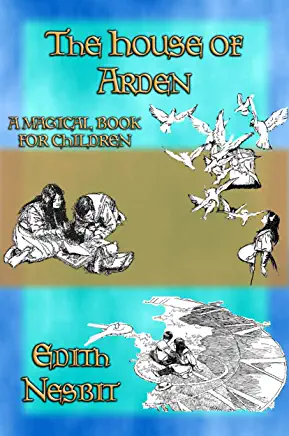
The Enchanted Castle, The House of Arden and The Magic City by Edith Nesbit 


Yes, these are all very old-fashioned books. The author's voice is very much in evidence, but it is always delightfully perceptive, kindly and humorous, rather than authoritarian, patronising or intrusive. There are attitudes towards servants and women and foreigners and social class that might cause modern readers to wince occasionally, but in fact Nesbit was very progressive for her time. Women are often presented as the truly sensible, brave and clever sex, for example.
            I love Edith Nesbit's children's stories, particularly the fantasies. I think she had an original, exceptional imagination, a lovely sense of humour, a real understanding of aspects of children's behaviour and the way they see the world, and a genuine fondness for her child-protagonists. If you can adjust your mind to the world in which she was writing, to the upper-middle-class children her books were aimed at, and if you like well-written children's fantasy, you will thoroughly enjoy these stories. It is hard to recognise these days, but her work was often quite groundbreaking.  
            Her life was pretty unconventional too. A.S.Byatt's novel The Children's Book is very loosely based on Nesbit and her contemporaries.

***** [excellent]


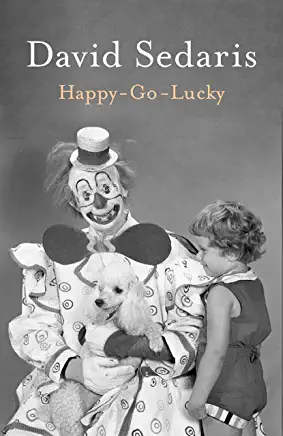
 Happy-Go-Lucky by David Sedaris


David Sedaris's work always works best when you hear him read it out himself. His weird little reedy voice and deadpan delivery renders it hysterically funny. When you read the books, you have to have this voice in your head, or otherwise some of the jokes pass you by. His humour is of a very distinctive kind - sometimes brutal, sometimes whimsical, quite often not easy to detect unless you read the sentences in your head in the way he would say them - sarcastically or ruefully. 
        I have read most of his published books and would recommend them all. Some have made me quite literally ache with laughter. Some have shocked me with their naked honesty. At times, I find myself disliking him - at others, most of the time in fact, I find myself nodding in agreement with his views and thinking how close to my own thoughts and opinions his are. This is odd as he is a small, now elderly, American gay man, from a large family, who is now very rich, so has very little in common with me.
        This latest book is one of his best, in my opinion. It comments on events that still feel current, such as Trump's presidency and Brexit, but it's real strength, as always, is Sedaris's depiction of his siblings and his long-time, long-suffering partner, Hugh. One theme that has stayed in my mind from this collection of humorous essays is his relationship with his problematic father, now very elderly (he dies during the time covered by the book). Sedaris dislikes his father, and it is easy to see why. He isn't particularly saddened by his death. But he reveals more information about the man in this book than in previous ones, and it isn't particularly edifying. 
        Sedaris's honesty is his real strength. He exaggerates and makes jokes and invents things, but at the heart of his writing is a weirdly potent compulsion to tell the truth, even when it makes him look foolish or unlikeable. You feel as if you know him, after reading his books, in a way that even stand-up comedians who draw on their own experiences don't quite do. 
         I thoroughly enjoyed this book and it didn't take long to read. However, it might not be the best Sedaris book to start with as it makes frequent reference to earlier events, and therefore might become confusing for a reader new to his writing. But if you're already a fan, I think you'll love this one.

*****  [excellent]


Monday, December 19, 2022

 D E C E M B E R   2 0 2 2 

Merry Christmas, Everyone!

Don't sweat the small stuff - there's too much of it!

 I felt like I needed a traditional Christmas rant, so here it is:

 I’ve been despairing again about the news. 

    Yes, the stories of war atrocities, injustice, political unrest, the cost of living crisis, strikes by public sector workers, the increase in food banks and homelessness, the Tories’ latest debacle, the economy, etc etc etc are all deeply depressing. However, what really annoys me is the banality and pointless exaggeration of much of the news I read online. Apparently, this country has been gripped by a Big Freeze over the past few weeks, when in reality it has been a normal seasonal chill – the real story is the fact that my geraniums were still in flower in my garden at the end of November. In Yorkshire. Yes, we’ve had frost and a bit of snow, recently, but this isn’t abnormal in Winter, is it?

    And then there are the non-stories. Here’s one I just read on the Huffington Post. Apparently, a man in Derbyshire ordered an expensive Macbook Pro laptop for his daughter for Christmas, from Amazon, and was instead sent two boxes of Pedigree Chum.


Ok, this is mildly amusing, unless it happens to you, but even if it does happen to you, it’s a relatively trivial blip in life’s rich tapestry, I would have thought.

The man in the story explained how Amazon’s initial response was to refuse to refund his money, which seems unlikely to me and suggests they had misunderstood or that there was more to the story than the news item suggested. Anyway, they subsequently apologised and promised to repay him, so presumably all is now well.

The aspect of this story that struck me was how varied human personalities are in their responses to what are in reality minor inconveniences, but how the responses that are reported in the media are always the ‘outraged’ type. These stories would have no readworthy aspect at all if the protagonist wasn’t presented as being an ‘outraged victim’ of something or other, and we weren’t all invited, and expected, to become outraged on thie behalf.

According to the media, the population of this country are in a permanent state of outrage, or at least they ought to be. Everything from the gender pay-gap to Autumn leaves falling on their lawns seems to make people apoplectic with fury. There doesn’t seem to be any nuance, and the media seems to expect us all to ratchet up our own emotional responses when we read these stories too. As far as I’m concerned, a man being sent the wrong item by Amazon is a complete non-story, barely an anecdote in fact. It might evoke a small smile, but outrage? Surely outrage is an emotion best kept in reserve for things that really deserve it, such as people voting to leave the EU or a homeless Polish man being beaten to death by a British racist.


The man who received the dog food by mistake had, tragically for him, been recently diagnosed with a serious health condition, and this was used in the article as a supposed reason to view Amazon’s blunder as being somehow more significant than it was and the man’s experience somehow more upsetting than it would have been for someone else. But, much as I believe that companies like Amazon are run by the Devil’s Disciples, it isn’t as if the CEO called the warehouse and said ‘Make sure you send dog-food instead of an Apple laptop to Mr X because we’ve just found out he’s suffering from XXX’, is it? It’s terrible for this poor man to have been diagnosed with a serious illness, but I’m sure that, of Amazon’s many erroneous deliveries (they’re a huge company so they’re bound to make many errors), there will obviously be a proportion that are misdelivered to people with serious health conditions. This doesn’t make the error somehow more heinous than if they were delivered to the super-fit, does it? Looking at it another way, you might argue that this particular man must be wealthier than many people in this country as he can afford to spend £1200 on his daughter’s Christmas present. I can’t afford a Macbook Pro, for example. But this doesn’t mean that Amazon’s error is less difficult for him to deal with. It’s just an error, and errors happen because people make mistakes now and then, particularly massive companies employing huge numbers of staff and underpaying most of them. That’s what we should be outraged about.

It is also the lack of logic that makes me despair. I’m as guilty as anyone of this. We all ‘instinctively’ feel that if we’ve thrown two sixes in a row, the next throw is less likely to be another six. Or if we use a different lottery number from the one we’ve used for the past five years, this will be the week those numbers come up. The ‘victim’ of this ‘terrible tragedy’ suffered from a different kind of logical fallacy. He was quoted as saying he had bought things from Amazon for twenty years with no problems, but he was no longer going to shop with them, which seems a weirdly illogical thing to do. If they have been reliable for two decades but make one minor blip which they put right, even if they annoy their customer by initially being unhelpful and even rude, isn’t this like cutting off your nose to spite your face? Surely, shopping on the High Street or even online shopping in various different stores is going to be more inconvenient and stressful, particularly for someone with a serious health condition, than continuing to use a company that has been reliable for twenty years? It’s like saying ‘Well, my friend has supported me through thick and thin since we were children, but she accidentally broke my lamp last week so I’m never going to speak to her again’.

I am not supporting Amazon here. Like most people, I find the company a very convenient way to buy things, and I love my Kindle. However, I still have misgivings about many of its business practices. And I’m not knocking poor Mr X in Derbyshire who received two boxes of dog food when he’d ordered a computer – most of us would be at the very least a bit miffed by this.

But please let’s get things into perspective. Let’s think about what really is news and what isn’t. Let’s try not to let the everyday problems we all experience now and again overwhelm us or seem much bigger than they really are. Let’s focus our anger on people who really deserve it – say, Elon Musk.

One thing that I’ve learned since I reached my fifties is that time goes past ever more quickly – tempus fugit indeed! – and even the important stuff passes by in a blur. Your car needs a new tyre, you have to cancel a get-together due to Covid, you’re worried about going to the dentist for a filling, the train is delayed, you haven’t bought sis’s Christmas present yet, they’ve run out of satsumas at your local supermarket, you’ve put on a few pounds, you ordered a copy of ‘A Christmas Carol’ from Amazon and they sent you a pound of sausages instead. These things will pass. You’ll deal with them, one way or another, and they’ll be replaced by some other trivial problem.

So don’t get outraged. It’s bad for your physical and mental health. Don’t let the media wind you up. Just deal with the problem and move on. Do something worthwhile to fill your memory bank with joy instead. Join a choir. Go to an Art Gallery. Go on a protest march. Become a Samaritan. Drop some groceries into a food bank collection point. Organise a Christmas party for your elderly neighbours. Phone your parents. Take in a stray cat.

On your deathbed, you don’t want to waste your time regretting not decking the delivery person who brought you the wrong item from Amazon.

Publications in 2022

Here is a list of the pieces I have had published, placed in competitions or shortlisted in 2022:


Secret Attic – stories which won 1st prize:                  - 

The Leaf [Picture This!]

Different Worlds [drabble]


‘The Artist’ [poem] was accepted by New Verse News, Thursday 24 February 2022,https://newversenews.blogspot.com/search?q=Louise+Wilford


‘Blue’ [poem] was accepted for Issue 53 of Silver Blade (May 2022*)


‘The Immigrants’ [poem] was accepted for the American Diversity Report [ADR], a spin-off of Silver Blade,  Jun 2022 issue


‘Backwards’ [short story] was accepted by River & South, published in Summer 2022,  https://riverandsouth.com/index.php/2022/06/17/backwardslouise-wilford/


‘Quake’, ‘No Seeds Were Lost’ [poems] and ‘L and Mark’ [short story] were accepted for Makarelle, Spring edition, theme: Landmarks,  https://makarelle.com/


‘Pink’ [comic poem] won an informal Facebook comp on Suffolk Writers group


Four five-line poems were accepted by Punk Noir, April 2022


‘Misunderstood’ [Flash] was accepted by Pine Cone Review, Issue 4https://thepineconereview.com/louise-wilford-misunderstood-issue-4/


‘Miranda’s Child’ [short story] was accepted by 805  https://www.805lit.org/post/mirandas-child


‘To The Youngest’ and ‘Thistle’ [poems] were accepted by Last Leaves, Issue 5 (theme: Growth):  https://www.lastleavesmag.com/last-leaves-issues https://www.lastleavesmag.com/_files/ugd/dccfc8_88b991023bc845f180be7def8e01249c.pdf    ‘Thistle’ on p141, ‘To The Youngest’ on p153


‘Target’, ‘Dressed to Impress’, and another piece of flash fiction were accepted for the ‘Flash Mob’ anthology of Flash Fiction organised by Crossing The Tees Festival


‘Pigs can’t swim’ [short story] was accepted by Fairlight Books and appeared in the summer:  https://www.fairlightbooks.co.uk/short_stories/pigs-cant-swim/.


‘Basil’ [children’s short story] was nominated for Best Of The Net 2022 by Amanda Marerro, editor of Parakeet children's magazine


‘Dead Batteries and ‘Shy’ [poems] were accepted for Bindweed's Winter Wonderland Anthology, being published on 21 December


‘Crimes and Misdeameanours’ [short story] was accepted by Makarelle, and appeared in the Summer 2022 edition, themed ‘Sizzling Misdemeanours’ https://makarelle.com/


‘A Public Enquiry Into The Case Of Edward Overdice’ [short story] was shortlisted for Dark Matter but not ultimately chosen


‘Choose’ [Flash] came third in the Fosseway Flash Fiction Competition 2022


‘The Sea On The Doorstep’ [children’s short story] was accepted for Parakeet, to appear in next edition published on 15 January, 2023   https://www.honeyguidemag.com/parakeet-shop


‘Visiting the T-Rex in the National History Museum’ and ‘The Word Worm’ [poems] were accepted for Balloons Lit available by the end of 2022
www.balloons-lit-journal.com 


‘The Goddess Of The Free’ [poem] was accepted for POTB, Issue 17, out on 21 May 2023


‘On Christmas Morning’ was read out (beautifully) by the lovely Gae Stenson at Wirrall Poets Christmas poetry reading on Wed 14 December

Thursday, December 15, 2022

Book Reviews: What I've read since last month

 Transcriptions & Human Croquet Kate Atkinson


Anyone who has read the book reviews on my blog before will know I am a huge Kate Atkinson fan. During the past month, I have read the last two of her novels downloaded onto my Kindle and I suspect this means I’m up-to-date with her current oeuvre, so no more to read for a while, sadly.

Human Croquet was a title I had on my Kindle for years without reading. I actually thought it was by Rose Tremain, though that wasn’t why I was avoiding reading it as I like her books too. It just kept slipping out of my sight-line, for some reason. Anyway, I have now read it. It is a novel about fairytales and Shakespeare and forests, common themes in Atkinson’s work. Transcriptions, a novel about spies in WW2 and the BBC in the 1950s, has a central character called Juliet and frequent references to Shakespeare.

            Having read Atkinson’s masterpieces A God in Ruins and Life After Life within the past six months, and having very recently re-read her stunning debut Behind The Scenes In The Museum, I was at first rather underwhelmed by Human Croquet. It had Atkinson’s characteristic humour, diversions into the almost-magical and the certainly weird, but these moments were finally explained away by ‘reality’. The apparent time-slips and alternative realities in the novel were very compelling to me however, though they are given a mundane explanation at the end. Atkinson has great skill at conveying the experience of dysfunctional family relationships and this book displays this power very vividly. It also contains at least one monstrous human being.

            By contrast, Transcriptions isn’t concerned with families but with the loyalties and betrayals of wartime colleagues and friends, bound together and split apart by duty and ideology (and by shared trauma). It is a novel whose central theme is fidelity – it asks us to consider the meaning of faithfulness, of patriotism, of the truth, and of treason and duplicity. Like all Atkinson’s novels, it has moments of great humour. Juliet is a mistress of dry wit, and there are several set-piece scenes, particularly in the early part of the story, where her youthful naivity makes her a deeply unreliable and comic character. But this is a serious novel, ultimately, dealing with grave, sometimes frightening, realities. Overall, I found Juliet herself a rather distant, unsympathetic character. I don’t think I would like her if we met, whereas I could imagine liking the central character of Human Croquet in real life. The adult Juliet has an emotional control that makes her seem distant – she is interesting and cares about others, but she is such a private person, for reasons that become clear as the novel progresses, that it is difficult to fully warm to her.

            Both novels are definitely worth a read, particularly if you’re an Atkinson fan.


***** Excellent – highly recommended, though not her absolute best


Breathing Lessons Anne Tyler


Anne Tyler sets her novels in Baltimore, and you do get a flavour of the city from them. However, what they really give you is an insight into human relationships, particularly those within families. Like Kate Atkinson, she is a mistress of the domestic drama – unshowy, unflamboyant, often quietly profound, often humorous, always devastatingly realistic, she unpicks the strands that bind and divide people, with immense skill.

            She is best known for her 1985 novel, The Accidental Tourist, which was made into an excellent film starring William Hurt and Geena Davis. This novel, along with her 1982 novel Dinner At The Homesick Restaurant (my personal favourite) and Breathing Lessons (1988) were all shortlisted for The Pulitzer Prize, and she has won and been nominated for many other awards.

            Her central skill is in her attention to detail. Without becoming pedantic or clogged down in the trivial, she manages to capture the nuances of everyday relationships with superb intricacy. Her characters sound like real people. The couple in Breathing Lessons have the sorts of arguments we all do, and speak in the sort of language real people do, just with a Baltimore accent. They engage in throwaway bickering, they have banal conversations which often disguise deeper emotions, they misunderstand each other and sometimes understand each other more than they let on. They say things which the readers, with our broader knowledge of what different characters are thinking, recognize as revealing aspects of their characters unknown to themselves.

            The action in Breathing Lessons takes place during one day, when Ira and Maggie Moran are driving to a friend’s funeral and then home again. Along the way, they have several minor adventures and there are numerous opportunities for them to reminisce and squabble and wind each other up, and to forgive and understand each other’s idiosyncracies. We find out about their youth and how they met, about their children and their grandchild. The book is frequently laugh-out-loud funny and occasionally brings tears to your eyes. The characters are utterly believable, and the tone is generous, sensitive, sympathetic, but always unsentimental. I loved this novel, though it isn’t as good as Dinner At The Homesick Restaurant, which I believe everyone ought to read.

            Many of Kate Atkinson’s novels are set in the mid twentieth century, and many of Anne Tyler’s novels were written in a contemporary world which is now decades old. The advantages of this are that characters don’t have mobile phones and the internet – they feel like they are about a different world in some ways. However, human relationships don’t change. It is only in characters’ interactions with their contemporary milieu that things are expressed differently perhaps – the essential tensions and bonds between people remain much the same from generation to generation. Atkinson is a more whimsical writer, more likely to engage in magic realism than Tyler, but both are extremely good at conveying the subtleties of marriage, parenthood, and friendship.

***** Highly recommended


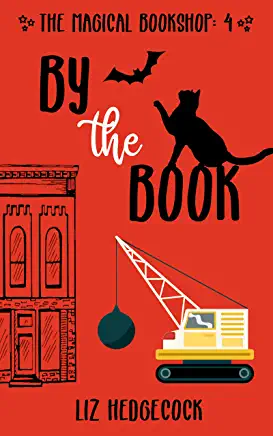
Burns Books series by Liz Hedgecock


   etc


This is an unchallenging series of comic fantasy novels about a magical bookshop. It has a magical cat, dangerous books, an immortal owner, vampires, a coffee shop (by book 2) – oh, and an ordinary, modern young woman with a degree in Business Studies who becomes it’s manager. What’s not to like?

            Well, it is written in a very straightforward and rather unexciting way and the plots are remarkably simple. It is essentially a child’s book but for grown-ups. Everything is explained, even spelled-out – very little is a surprise for the reader, unless the reader is someone who is very easily surprised. Characters are uncomplicated and predictable, and above all never horrifying or genuinely scary. There is a lot of narrating of everyday activity iike serving customers and filling shelves and choosing what to have for your tea. The central character, Jemma James, is perfectly likeable but deeply unrealistic. She is sweet, kind, warm, efficient, rather naïve, has a comical faith in modern HR procedures and business-speak, and has the rather chaste relationship with the young man who runs the bookshop’s coffee shop of a girl-next-door from a 1950s or 60s novel that your mum would approve of you reading.

All this means you don’t have to worry about having your emotions put through the wringer. You won’t be kept awake by the exciting plot twists or sudden unexpected diversions, as everything is well-signposted. This is definitely ‘cozy’ fantasy. Words like ‘gentle’, ‘restful’, ‘undemanding’ come to mind when I think of how to describe the series. It is in fact excellent bedtime reading if you like mild fantasy of a rather unimaginative kind. Hedgecock does this stuff very well, and it is a definite niche for aspiring writers.

*** good bedtime reading if you like ‘cozy’ as a genre