And finally we come to The Big
Interview, in which Suzanne kindly
answers writing-related
questions and lets us into
some of her writing secrets...
1.
How old were you when you first knew you
wanted to be a writer, and what set you off down that journey?
I didn’t seriously
consider writing until my late 40s while studying for my BA (Hons) with the
Open University. My lifelong love of reading had given me an aptitude for
studying English Literature, and I decided to combine this with creative
writing. My first writing tutor gave me the confidence to start out with my own
poetry, and this provided a very welcome respite during very stressful times as
a Mum. I’d only written a few stories during school days before this, so a huge
gap, but I truly surprised myself over how much I enjoyed seeing my words take
shape. It was the same with fiction: from insight came inspiration.
2.
Tell us about the books and writers that
have shaped your life and your writing career.
I was an only child
and I often took refuge in reading when there were tensions between my parents.
Enid Blyton was a big favourite via The Famous Five adventures and tales
of boarding school life with moral messages at Mallory Towers. I guess I
was looking to escape to simpler, more nostalgic times. Morality was also a
feature of Ballet Shoes by Noel Streatfield, What Katy Did by
Susan Coolidge, and L.M. Montgomery’s Anne of Green Gables. All of these
had a happy ending but that had to be earned by the main characters. The
Chronicles of Narnia by C.S. Lewis gave me a fantasy world of magic and
mythical beasts to enjoy – again, providing me with the escape I needed.
By my early teens, I was into the glamourous thrillers/romances by Mary
Stewart, which took me to dreamy locations in Lebanon, the Austrian alps, and
the Mediterranean. I also started borrowing the powerful novels by
Wilbur Smith from my dad because they epitomized the rawness of Africa, with
strong characters really bringing that great continent to life on the page.
Through my years of working as a civil servant and then into motherhood,
I enjoyed a range of fiction: crime and psychological thrillers (authors such
as P.D. James, Ruth Rendell, Tana French, Steig Larsson, Val McDermid, to name
a few), timeslip/historical novels (from Barbara Erskine and Kate Mosse),
horror (from James Herbert and Stephen King), romance (from Rosamund Pilcher
and Joanna Trollope), and adventure from Clive Cussler.
More recently, I’ve been engaged with crime fiction and psychological
thrillers from C.L. Taylor, Gillian McAllister, Lisa Jewell, Elly Griffiths,
William Shaw, and Marisse Whittaker. I’m inspired by William Shaw, Marisse
Whittaker, and C.L. Taylor in particular, while I work on my own novel. Shaw’s Salt
Lane features his Detective Sergeant Alexandra Cupidi. She’s a classic mix
of toughness and frailty so familiar in detective fiction, but she’s not a
cliché. Shaw lets his readers meet her whole family and they have a brittle,
hard-to-get-to-know shell, but he gives wonderful glimpses behind this exterior.
This is helping me develop my own Detective Inspector Karen Drury. He also
gives a strong sense of place with his settings on the Kent coast (Dungeness in
particular), with spare but vivid descriptions which are inspiring for my own
settings on the Suffolk coast. Whittaker’s ‘The Devils Line’ is giving
me a good sense of how County Lines drug dealing can be developed within a
novel. And Taylor’s evocation of Domestic Noir in several of her novels, is
also helping me to shape my narrative in The Martello Murders.
Open University study has really helped me appreciate how much work goes
into fiction and poetry. It’s been a pleasure to be reintroduced to Jane Austen
whom I first studied for O Level many years ago, but also to have access to so
many more classics that I’d heard of but never had the chance to take in at
school, by great writers such as Shakespeare, Charlotte Bronte, Charles
Dickens, Wilkie Collins, Thomas Hardy, and Emile Zola. I’ve enjoyed looking at
some fascinating parallels between older literary fiction and plays, and
contemporary fiction in terms of characterisation, setting and plot. The
classics are also full of sharp societal observations which were well ahead of
their times, and the social insights from Shakespeare, Austen, the Brontes, and
Hardy, have given me a real sense of history too.
With poetry, I’ve enjoyed Keats and Coleridge since schooldays for their
romantic dream-like imagery, and Open University study introduced me to Shelley
for a similar experience. I had a great English teacher at school who was very
focused on the First World War poetry of Seigfried Sassoon and Wilfrid Owen,
such tough reading but so important to learn about the immense sacrifices that
took place. Through starting to write my own poetry, I’ve been drawn to the
simplicity of Haiku. The Japanese poet Basho has been my go-to guidance for
this form, with his beautiful evocations of the natural world: the cherry
blossom, the summer moon, or the winter snow for example. The Buddhist Zen
ideal of oneness with creation runs throughout Basho’s poems, and reminds me
that it’s always good to just stop and appreciate the beauty in our
surroundings.
Another influence on my own poetry has been Sylvia Plath for her raw
confessional style combined with intense imagery and powerful language. These
feature strongly in her collection of Bee poems written in 1962, where she uses
the natural metaphor of bees to convey her own chaotic emotions. ‘The Arrival
of the Bee Box’ and ‘The Swarm’ have inspired me and given me confidence to
project my own thoughts.
3.
Have your children, other family
members, friends or teachers inspired any of your writing? In what way?
One of my first
inspirations came from the difficult relationship I had with my dad due to his
alcoholism. Drink gave him a split personality and he could be dangerously
unpredictable while under the influence. I found I could look at this more
objectively with the passing of time, so I decided to use the drama of it to
write my first short story for the Open University. It ended up being very
cathartic for me to engage with this sadder part of my past. I’d sought various
forms of therapy over the years to try and address his effects on my mental
health growing up, but I hadn’t gone back to the roots of it all before.
Catharsis has also come through life writing, and this has been inspired
by the pressures of motherhood. Back in 1995, my husband left for active
service in Bosnia with the Royal Artillery. I was suddenly a single parent to
our two sons, both of whom were vulnerable. Our eldest Matthew, had been
through cancer treatment, and our youngest Jonathan, was being assessed prior
to being diagnosed with autism. It was a very uncertain time and a lot of
emotion was put to one side in order to function and just get through. Looking
back and writing about it made me realise just how strong we’d both been as
parents.

"My autistic son Jonathan, who is happily settled in a lovely home near Selby, North Yorkshire
with housemates and carers who are like a second family to him.
So good to have peace of mind re the future for him"
4.
Does the place you live have any impact
on your writing?
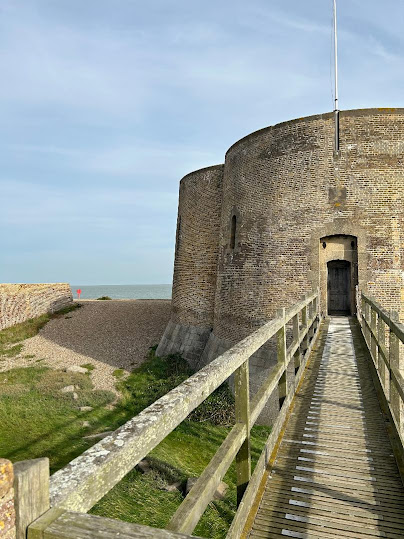
I think I’m quite
content in my own small study that I’ve created in a spare bedroom. It looks
out over the back garden with a view of the local church and some lovely trees
beyond that. I don’t focus too much on the outside if I’m really into what I’m
writing, I just need some music in the background. I live in a terraced house,
but I guess my ideal location would be either detached and more rural, or by
the coast. However, I feel having a beautiful view is good for the thinking
process. A place to dream and just be, is an inspiration in itself. I’ve always
loved the Suffolk coast so it’s the right choice as a setting for my novel.

"The Suffolk coast at Aldeburgh, I love the raw power of the sea and how it meets the sky on the horizon "
5.
How would you describe your own writing?
I have a need to
know that my writing contains elements of truth and relatability, and this
lends itself strongly to realism for my fiction. Sometimes my subject matter
can lead me to become dispassionate, but for the most part I like my characters
to show and feel strong emotions in realistic situations. With my poetry I’m
open to love, joy, sorrow, fear, hope, and longing in the natural world, and
through realism in relationships. I’m interested in magical realism but haven’t
tried it yet.
6.
Are there certain themes that draw you
to them when you are writing?
I’m drawn to themes
of courage and perseverance and I think this could be a reaction to what I’ve
had to deal with in my life so far. I’ve often needed to dig deep and find some
inner strength, so it seems natural to want my characters to do the same. Love
and loyalty also appeal to me, alongside justice.
7.
Tell us about how you approach your
writing. Are you a planner or a pantser?
I’ve been a pantser
for quite a lot of my poetry and short stories to date, but fully recognize the
value of planning for my novel, and that is the way forward for me now. I think
being a pantser stemmed from inexperience and the need to get my ideas down
before I lost track of them. I would often research as I wrote for shorter
pieces, so my iPhone was always to hand. I also enjoyed seeing where my free
writing could take me.
8.
Do you have any advice for someone who
might be thinking about starting to write creatively?
I think the value
of reading widely to expose you to other styles of writing, vocabulary, and
techniques can never be underestimated. It’s amazing how much you can absorb
subliminally, lodging information in your mind which can spark new ideas or
enhance the ones you already have.
9.
Are you, or have you been in the past, a
member of any writing groups, online or face-to-face?
I enjoy being part
of the Open University Write Club Society which I joined at the start of my
creative writing studies. It’s a lovely supportive community. More recently,
I’ve engaged with a couple of Facebook groups which focus on journaling as a
practice for mental wellbeing and connecting with nature [links to these appear
after ‘biography’ section].
10.
Have you ever studied creative writing at
university or any other courses?
I have a BA (Hons)
in English Literature with Creative Writing, and Masters in Creative Writing
from the Open University. Some of the best outcomes of those for me have been gaining
confidence and self-belief for study and writing, but also for life in general,
recognizing the importance of effective time management, giving and receiving
feedback in order to grow as a writer, and learning to hone my writing to fit
within selected word limits (something that makes me strive to improve each
time). Everyone is different.
I saw my studies as unfinished business from my youth, and I wanted to
see how far I could go with them. I think the Open University creative writing
modules provide good technical guidance and support from both tutors and other
students. I would recommend the OU A215 module for people just starting out as
writers, as it draws on ‘Creative Writing A Workbook with Readings’ [edited
by Linda Anderson], which can also be studied independently. The author and
poet Blake Morrison recommends it as: “An invaluable guide, full of useful
tips, mind-freeing exercises, and inspiring wisdom from established authors.”
It is available on Amazon.
11.
What do you think about getting feedback
on your work from other writers and/or non-writers?
I’ve always found
feedback really valuable when developing my work. The Open University provided online
forums for this, which became good supportive communities in their own right,
and it was possible to branch out from them and have contact with fellow
students privately. Similarly, I’ve been very grateful for feedback from
private beta-readers who are not writers, but know what works for them as
readers of fiction and/or poetry.
I think constructive feedback can be a lifeline when I get too close to
a piece of writing (always ideal to try and take reasonable breaks between
drafts), offering me the chance to see it from another perspective. Feedback
from Open University tutors, all of whom are experienced writers in various
genres, has always been focused on helping me improve, though none of them have
been Crime Fiction writers. I have acted on some suggestions made by
feedbackers and beta-readers throughout my writing to date, and will continue
to do so in the future.
12.
If you have experience of
self-publishing, what have been its challenges and rewards?
I haven’t
self-published any of my own writing yet, but it’s something I’m considering.
I’m following the experiences of other writers with interest, in the meantime.
13.
Where do you get your ideas from?
I enjoy taking
inspiration from nature and feel lucky that my day job helps me do this on a
regular basis, taking in the changing seasons in customer gardens which span
several acres. I observe people of interest and this is helping with the
foundations of my novel. Sometimes there will be a story in the news media
which strikes a chord with me. During my university studies, I’ve drawn on some
of my own experiences which hasn’t been easy but I feel it’s given my writing
some authenticity.
14.
They say that successful writers need to
be selfish. How far do you agree with this?
I would say yes,
there does have to be some degree of selfishness with writing. It’s largely a
solitary pursuit which needs time and space to progress. It can be difficult to
strike a balance if you’re not a full-time writer, and I confess that I’ve
found that difficult despite having an understanding family. I write mainly in
the early evenings on weekdays and have more time to focus on Sundays at the
moment. However, a lot of thoughts come to me outside of these times so I’m
continually noting on my iPhone for quick access. I have to say that I’m
feeling inspired again after losing direction for a while after I graduated,
and I’m very happy about that. I have my own study to work in. It’s a quiet
space which is always welcome after being busy elsewhere.
15.
Beyond your family and your writing,
what other things do you do?
I’ve just started
some weight training for strength as part of focusing on my health. While I
walk a fair bit with the day job, it’s always lovely to get out and about with
our young black Labrador called Marley. I enjoy going out for a drink and/or a
meal, but I’m just as happy to cook at home. The garden at home is still
ongoing in that there are always new ideas for it, but not as much time due to
working for other people…haha.

Marley
"He’s a real character and walking with him gives me thinking time for writing."
16.
Would you describe yourself as a
‘cultured’ person?
Yes, I think I can
call myself a cultured person in terms of having a strong interest in the arts
and enjoying studying some of them. I read for pleasure and for knowledge; it’s
a lifelong habit originally instilled by my dad, and a part of him that I’ll
always cherish. I’ve read classic literary novels for study and some
contemporary literary thrillers for pleasure. They’re always compelling for the
way the way they explore the human condition, making some of our own life
issues like love, prejudice, or power more real and accessible via fictional
characters.
The most literary
things I’ve written are essays which have deepened my understanding of the
genre.
I don’t go to the theatre as much as I’d like right now, but have
enjoyed plays and musicals over the years. Music is always good for me, it
really helps me through dark periods as I’m prone to anxiety and depression. I
enjoy a fairly wide range from rock, pop, and soul (live concerts where
possible), to jazz and classical (radio and YouTube occasionally).
Cinema is another favourite. We have so much home entertainment at our
fingertips now, but it’s always good to get out for different experiences. I
tend to go for action/thrillers mostly but also like a rom com sometimes, or
some horror. I’m enjoying quite a lot of crime dramas on TV at the moment, a
mix of old and newer productions such as: Cracker, Wire in the Blood, Scott
and Bailey, Prime Suspect, Grace, The City is Ours, The Bay, and Out
There, to name a few. These are particularly good for me alongside reading
for my own novel, as a way of getting into the right mindset. I also like
period dramas, comedy, some documentaries, and the odd quiz show.
I think the contemporary art world could be a rich source of ideas for
many writers, so, yes, I would recommend keeping in touch with it according to
individual interests, be that performance art, painting or photography, amongst
others.
17.
Are you interested in history and, if so,
does it impact on your writing?
I’ve always been
keen on history. I wrote a 4000-word story called ‘Divided Loyalties’ which was
based on the evacuation of Tyneham village in Dorset during December 1943, for
the final assessment of my BA (Hons). The area was needed for military training
in advance of the D Day landings, but when WW2 ended, the villagers were never
allowed to return. I wanted to portray some of this sacrifice via placing my
fictional characters amongst real events. Their experiences had to be
authentic, especially as the war is still withing living memory. My research
was fascinating, yet felt so poignant. Tyneham is known as the village that
died for England, and remains part of the Armoured Fighting Vehicles Gunnery
School for the British Army, to this day. History is another rich source of
inspiration for writers in all genres. It’s been tapped into so much already,
but the possibilities remain vast. Similarly, current affairs,
science/technology, politics/world affairs, offer so much scope for the writer
and I think it’s important we keep documenting what’s happening around us for
future generations, be that via fiction, poetry, journalism, memoir or whatever
form we choose.
18.
How did the Covid pandemic affect you as
a writer?
It was such a
strange and difficult time. I admit to being fearful like so many people during
the first stages, but I also felt lucky to be able to go back to work safely
outdoors. My senses were heightened even more amongst nature and you’d think
that would be good for writing, but I was very mindful of what people were
going through and all the sacrifices being made daily. I was glad to contribute
a little to some anthologies produced by Write Club OU in aid of NHS Charities.
I also wrote a letter of hope as part of a scheme set up by one of my writing
tutors in the North East, to offer comfort to a community which had been badly
affected by the virus.
19.
There is a lot of talk at the moment. in
the publishing world and elsewhere, about political correctness, the Woke
movement, cultural appropriation, ‘cancel culture’, ‘trigger warnings’,
sensitivity readers and the importance of diversity. What are your thoughts on
this, with regard to writing?
The world is
extremely sensitive now, in so many areas. It’s vital that we keep
communicating and writers are at the forefront in that respect. It takes
confidence and often bravery to navigate a multitude of contemporary
restrictions, but I feel it has to be done with fairness and compassion too.
Respect should be given to other cultures, especially if writers don’t have
first-hand experience of them. We would expect it for ourselves here in the UK.
However, I’m sadly all too aware of how our hard-won freedom of speech has been eroded over the
years. It’s tougher than ever to express our beliefs and make a difference.
20.
Where would you place your own writing,
on a continuum with PURE FANTASY at one end and COMPLETE REALISM at the other?
My writing leans
more towards realism, in that I’m interested in the behaviours associated with
human nature. I don’t know a lot about fantasy as a genre. I’ve read The
Chronicles of Narnia as a child, but I’ll admit this genre hasn’t always
been my first choice as an adult. I have equated it with ‘sword and sorcery’
and ‘sci-fi’, but have come across some novels from Open University students
which have shown me there is so much more to it. I do think there is a place
for it, as with all genres – there are definitely a lot of fans out there.
Realism is what I’m more interested in personally, but variety is a good thing
and should be encouraged.
21.
Do you have any particular health or
other issue that affects your writing and if so how have you overcome this?
I’ve
been prone to anxiety and depression since I was a teenager, for different
reasons. It still comes and goes (I’m on long-term medication for it), but I’m
much better at recognizing the onset and dealing with it, now. It can affect my
willingness to write, but I try to get over this by getting outdoors as much as
possible, being mindful, doing some breathing exercises, and journaling about
my feelings. Journaling really has been a help over the last year or so; it
lets me see my worth on the page and I can be totally honest with myself.
Background music when I’m writing or doing jobs around the house is also a real
positive for me.

"Walberswick beach on the Suffolk coast, where I wrote the first draft of my poem ‘Burnt Offerings’"
******
Thank you very much, Suzanne, for such an entertaining and fascinating showcase.
******
In July, I will be showcasing
another fabulous writer:
Cinnamon Matthews
Not to be missed!
******
So far in this series, I’ve showcased the following writers:
Ruth Loten – March 2023
Jane Langan – March 2023
Beck Collett – April 2023
Ron Hardwick – June 2023
L.N.Hunter – July 2023
Katherine Blessan – August 2023
Jill Saudek – September 2023
Colin Johnson – October 2023
Sue Davnall – November 2023
Alain Li Wan Po – December 2023
Lily Lawson – January 2024
Philip Badger – February 2024
Glen Lee – March 2024
DHL Hewa - April 2024
Tonia Trainer - May 2024
Mike Poyzer – June 2024
Judith Worham - July 2024
Chrissie Poulter - August 2024
Adele Sullivan - September 2024
Lin De Laszlo - October 2024
Wendy Heydorn - November 2024
Elisabeth Basford - December 2024
Karen Honnor - January 2025
Sharon Henderson - February 2025
Gae Stenson - March 2026 [collaboration]
Dr Trefor Stockwell - March 2025 [collaboration]
Karen Downs-Barton
Pavitra Menon
Suzanne Burn
[29 so far]
You can find all these showcases by scrolling back through the material on this blog.
******