Check out my poem on:
https://foxglovejournal.wordpress.com/2020/06/14/as-she-waits-for-news-of-her-son-louise-wilford/
Monday, June 15, 2020

Sunday, June 7, 2020
What I've learned recently: The journey can be better than the destination!
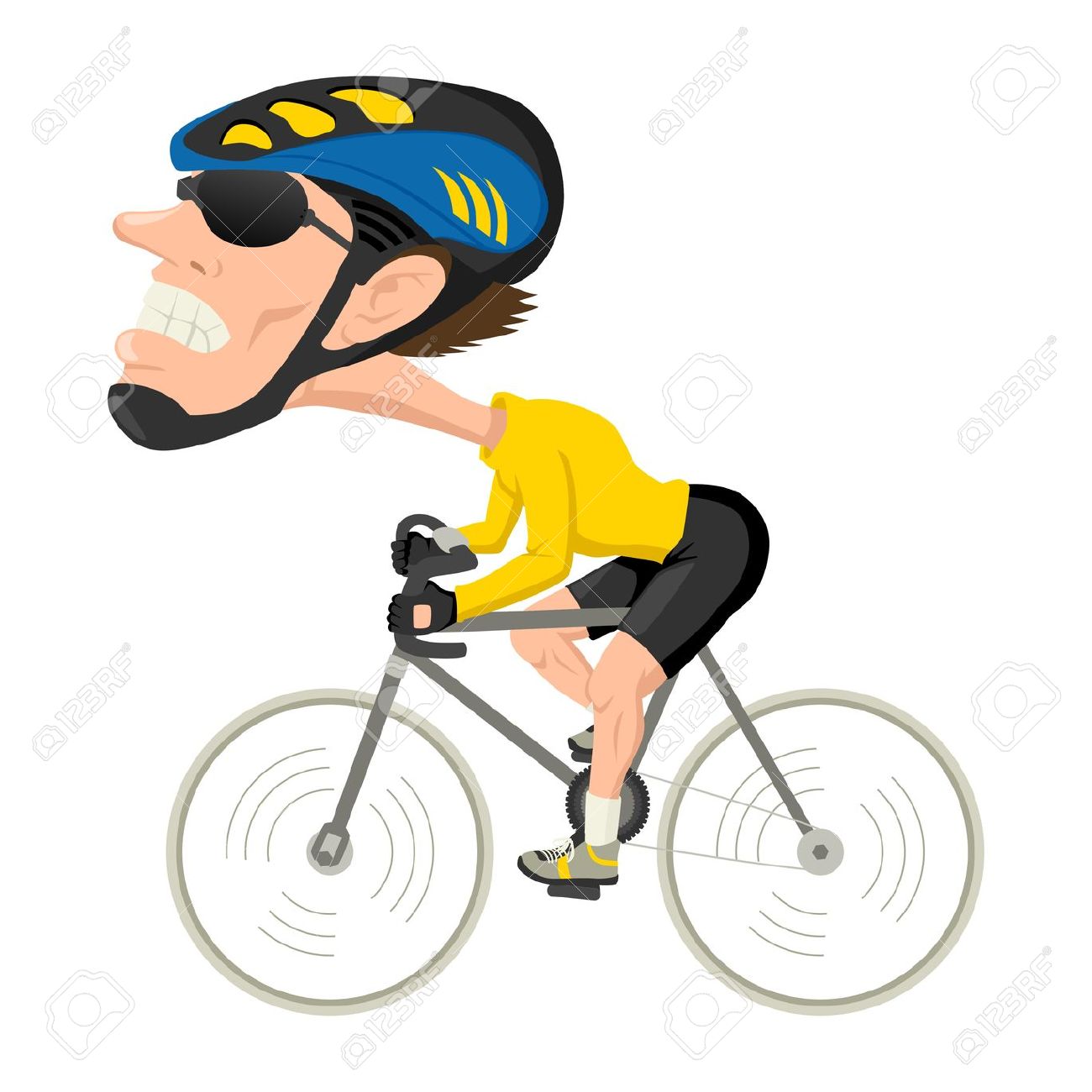
The perils of leaving home
I have a confession. Once, during a more stringent phase of the lockdown, we pushed the rules to breaking point. Remember when we were allowed to drive for longer journeys to get exercise, as long as the journeys weren't longer than the exercise? Well, we drove the half-hour journey from our house up into the hills above Ringinglow in Derbyshire. I had been coping with lockdown well, but I have a history of anxiety and I was beginning to get a little edgy and feeling that the black dog was lurking at the end of the garden path, so P thought that getting a change of scenery would help calm me down.
We took some sandwiches and a flask because the rules at that time said you could stop for food while exercising. But in fact, we parked the car in a layby and just ate our food. We thought we might take a walk afterwards, but I have been having problems with my back and I knew I couldn't actually go hiking for miles over the hills. There was only one other car anywhere in sight, parked like us in a layby. It contained an Asian couple with three young kids in the back, and it was several hundred feet away from us.
There were cyclists going past, and, as everyone knows, cyclists - at least when they're wearing lycra and pedalling up hills - always have the apparently godgiven right to be as self-righteous as they choose. One bloke rode past our car and started yelling abuse at us. He was also gesturing with his hands as if to say 'Unbelievable! Do these people not realise they are endangering both themselves and others?' (but with more expletives). I wished I had had the forethought to bring a pop-up sign saying 'Do you realise that frothing at the mouth while riding a bike without a mask and yelling abuse at harmless strangers is much more likely to spread the virus than eating a sandwich inside your own car with the windows wound up?'. He then moved on to vent his ire on the family in the other car, which incensed me even more than his yelling at us as I kept thinking how scared the children, who were very young, must have been.
Shaken up by this incident we decided to return home without having a walk. As we drove down the hill we were passed by a police van, presumably heading off to set the dogs on the other car...
I can understand the argument that using our car increases the risk of a breakdown or accident which would be a drain on the NHS and put Green Flag workers in unnecessary risk of infection, but our car is regularly serviced, reliable, had new tyres and a full tank of petrol, and we are careful drivers, There were few cars on the roads anyway. And there was no way we were otherwise spreading the virus. We had been in self isolation about five weeks by then. I can also appreciate that if beauty spots were filled up with visitors, social distancing would be difficult, and that rules are meant to be obeyed. But we hadn't broken any rules except that we didn't do the exercise we intended to do, and that was because of the abusive cyclist.
While my natural instincts are always to break rules, I am also sensible enough to want to be a good citizen during a pandemic. We had gone out to the hills in order to try to head off a simmering mental health issue, but in fact the abusive cyclist made me feel like I never wanted to leave the house again. I have always disliked the smugness of the lycra brigade. I have no problem with people riding bikes in their normal clothing for fun or to get to work. I even think that cycling is a good way to get fit and save the planet. I don't even mind actual athletes who are training for events. I would never want to prevent any cyclist from cycling round the British countryside and on the British streets (as long as they follow the rules of the road which they often don't). But I have known many incredibly sanctimonious men (they are usually men) who think that owning an expensive bike and wearing a skintight yellow jumpsuit and a pointy helmet entitles them to feel superior to everyone else. Apparently, they are single-handedly saving the planet and still have time to yell abuse at young children and middle aged couples. I know that this ghastly cretin who screamed at us up on the hills almost certainly spent time that evening tweeting about how 'fucking unbelievable it is that there were TWO cars parked on the hill with their occupants eating sandwiches!'. But we weren't breaking the rules at that time, and we certainly weren't spreading coronavirus. Whereas he was riding round, sweating profusely, spitting and coughing as he screeched, spreading his bodily fluids over the innocent countryside, while dressed in an outfit that made him look like a banana. I think that should be against the rules, myself.
The only thing worse than a Covidiot is a self-righteous, judgemental tit on a bike.
Anyway, to move onto a funnier subject, you should have seen me walking through the woods near my house last week. As I mentioned above, I've been having a problem with my back, but I didn't realise how bad it was until I was in the middle of the wood. The forest near our house climbs up a steepish hill, and going down this hill seemed to trigger my back pain, which shot up from an Ibuprofen-dampened three to an excruciating ten. There was nowhere to sit, except large rocks and fallen trees. I was shuffling along so slowly that I was being outpaced by a bright green caterpillar on the path beside me. We were quite a distance from the road, and I was beginning to panic because I was in such pain I felt I might not make it down the hill. With P's assistance, and after a ludicrously long time, I did make it to the Heritage Centre car park where I half collapsed on a low wall while P jogged home to get the car.
As I sat there, feeling pointless, several very elderly men with their equally elderly dogs, an old woman with a walking stick, a young woman in flipflops and with her ankle bandaged, and a toddler on a scooter, passed me, heading cheerfully home as if taking a walk in the wood was the easiest thing in in the world. Self-satisfied gits.
Writing Cue...
Look very closely at something.
I mean, REALLY close, so you can see the grain, the pores, the stains, and the flaws.
What you look at is up to you. It might be your garden fence, a piece of flaking plaster, a leaf, your own hand, an emery board, a lump of cheese....whatever takes your fancy.
The trick is to look close and for a long time. Let your mind begin to see the shapes and textures and colours as abstract things, then maybe as concrete things - the way a cloud can suddenly look like a dog carrying a stick, once you're in the right frame of mind. Let your mind wander but remain tethered to the object you're examining.
Write a poem. Whatever comes into your head. It might be several different poems. It might end up miles from where it began. It might shoot off in different directions. Just let your imagination go.
I mean, REALLY close, so you can see the grain, the pores, the stains, and the flaws.
What you look at is up to you. It might be your garden fence, a piece of flaking plaster, a leaf, your own hand, an emery board, a lump of cheese....whatever takes your fancy.
The trick is to look close and for a long time. Let your mind begin to see the shapes and textures and colours as abstract things, then maybe as concrete things - the way a cloud can suddenly look like a dog carrying a stick, once you're in the right frame of mind. Let your mind wander but remain tethered to the object you're examining.
Write a poem. Whatever comes into your head. It might be several different poems. It might end up miles from where it began. It might shoot off in different directions. Just let your imagination go.
What I've been reading...
Crow Investigations series by Sarah Painter
I first came across this series when the first book, The Night Raven, was recommended to me on my Kindle. I liked the title so I downloaded it, but I had a strange reluctance to actually read it. I did read the first page and it didn't really grab me, and at the time I had lots of other things I had to read so it remained unread on my Kindle for a long time. Then, one evening, I suddenly decided to give it a serious try, and I'm glad I did as I found myself quickly immersed in the world Painter creates. I read the second and third book in the series straight after each other, and I have pre-ordered the fourth one. They are pictured in order below:


The novels have some similarities to Ben Aaronovitch's Peter Grant series in that they are set in an alternative but recognisable contemporary London, feature a detective (this time a woman, Lydia Crow, who is a private investigator), and involve magic and the supernatural. I always like books set in London, a city I love, particularly when the writer clearly knows the place very well. Aaronovitch's London is probably more vivid than Painter's version, but the Crow Investigations series definitely captures the place,
I first came across this series when the first book, The Night Raven, was recommended to me on my Kindle. I liked the title so I downloaded it, but I had a strange reluctance to actually read it. I did read the first page and it didn't really grab me, and at the time I had lots of other things I had to read so it remained unread on my Kindle for a long time. Then, one evening, I suddenly decided to give it a serious try, and I'm glad I did as I found myself quickly immersed in the world Painter creates. I read the second and third book in the series straight after each other, and I have pre-ordered the fourth one. They are pictured in order below:
The novels have some similarities to Ben Aaronovitch's Peter Grant series in that they are set in an alternative but recognisable contemporary London, feature a detective (this time a woman, Lydia Crow, who is a private investigator), and involve magic and the supernatural. I always like books set in London, a city I love, particularly when the writer clearly knows the place very well. Aaronovitch's London is probably more vivid than Painter's version, but the Crow Investigations series definitely captures the place,
Her imaginative twist on the urban detective genre is to have her protagonist, Lydia Crow, a member of the powerful Crow family, based in Camberwell. Painter's London is divided between four magical families, The Crows (led by the formidable Uncle Charlie), The Foxes (led by Tristan Fox, whose son, Paul, used to be Lydia's secret squeeze), The Silvers (led by Alejandro Silver, whose barrister daughter is seriously upset by one of Lydia's investigations) and The Pearls. So far, we haven't learnt much about the Pearls except that they are excellent salespeople - I assume we will learn more in Book Four. Each family has particular magical gifts, though I think that the silver tongues of the Silvers are probably a bit close to the persuasive skills of the Pearls, though we will see how this plays out. The Foxes are, like their namesake, cunning, independent, secretive, dangerous, and have a potent physical and sexual charm. The Crows are historically the most powerful family, though the powers of all the families have been waning in recent decades.
In the first book, Lydia searches for her cousin Maddy who turns out (spoiler alert) to be not only more powerful than Lydia expected but also psychotic. The second novel focuses on the Silvers and their involvement in several murders. The third begins with Lydia's discovery of the body of a member of the Fox clan in an unused underground station. Each novel bleeds into the next, though they just about manage to remain self-contained stories.
A real strength of the series is Painter's ability to create tension. The scene near the beginning of the first book where Lydia is almost thrown off her rooftop balcony is terrifying and beautifully paced, for instance. Lydia is an interesting, feisty heroine. Brought up in the suburbs outside the main influence of her peculiar extended family, she is at first unaware of her own magical potential, thinking her only power is to recognise whether another person is a member of one of the four magical families. However, we see her discovering new skills as the narrative progresses, and her courage is inspiring. Her relationship with the good-looking Police Detective, Fleet, is also well-portrayed (though I found it odd that there seemed to be no reference to the fact he is black until halfway through book three - was his ethnicity an afterthought or a deliberate obfuscation?). Uncle Charlie is a particularly vivid character, and Painter creates an atmosphere of mystery, conflict and suspense - one puzzle is solved only to introduce another, one problem sorted only to lead to a further complication. The mystery of Lydia's ghost assistant's back-story is an excellent hook, though I'm ready for an explanation now.
Painter writes confidently and well, and is in control of her material. There is sufficient originality to keep the reader interested, though I did feel that some of the plot climaxes were a little underwhelming. Part of this is that investigations are sometimes puzzled out by reverting to Fleet using his police contacts or by other people telling Lydia things - I have felt that, despite my being fully engaged in earlier parts of each novel, the resolutions of the mysteries have pushed me as the reader away from the centre of the action. This is mainly because Painter sticks to what can realistically be achieved by a PI, only using Lydia's magical abilities occasionally. As the books progress, this improves - in Book Three there is a good sequence where Lydia makes use of her friendly ghost to solve one mystery. It would be satisfying to big up more of the minor characters, particularly Angel, the woman who runs Uncle Charlie's cafe below Lydia's flat,
Overall, however, this is a readable and entertaining new series that I would definitely recommend.
You can find Sarah Painter at:
RATING:
Crow Investigations series
****
Key:
***** highly recommended - a 'must-read'
**** good - well worth taking the time to read
*** ok - will help to pass the time in a boring situation
** not very good - just about readable but flawed
* not recommended - boring, offensive, badly-written or deeply flawed in some other way
***** highly recommended - a 'must-read'
**** good - well worth taking the time to read
*** ok - will help to pass the time in a boring situation
** not very good - just about readable but flawed
* not recommended - boring, offensive, badly-written or deeply flawed in some other way
Tuesday, May 5, 2020
RECIPE: Easy Meat and Potato pie
Easy Meat and Potato Pie
Ingredients:
one pack of chopped up stewing steak
one large carrot, peeled and diced
one large onion, peeled and sliced
one small stick of lettuce, washed and finely diced
one large potato, peeled and diced (larger chunks than other veg)
one knorr rich beef stock pot (or equivalent stock cube)
a glass of red wine (plus another to keep you company while you cook)
a generous spoonful of redcurrant jelly (optional)
a pinch of herb salt
pepper
a few shakes of smoked paprika if you fancy it
squirt of brown sauce
olive oil
cornflour
bay leaf
ready-made frozen shortcrust pastry, defrosted
egg yolk for painting on top of pastry
Method:
1. Brown the meat in a casserole dish suitable for using on hob. Set meat aside.
2. Fry veg in olive oil in casserole dish until beginning to soften. Return meat to casserole dish and stir to mix stuff together.
3. Add stock pot, herb salt, jelly, paprika, brown sauce, a generous dessertspoon of cornflour, and stir well. Add wine. Stir well.
4. Barely cover with hot water from kettle. Add a bayleaf. Cover and cook in oven on a low heat (160 on a fan oven) for about an hour, until meat is tender. The gravy should have thickened. If not, mix some more cornflour with cold water and add a little to the stew after it has cooled slightly, stirring well.
5. Set aside until cold. Then tip into a pie dish.
6. Roll out pastry. Cover top of pie, paint with egg yolk and cut two or three inch-long air vents in top. Cook in oven at 180 (fan oven) until pastry is cooked.
Alternatives:
- use different vegetables.
- use different flavourings - different spices, herbs, chilli, garlic, tomato puree
- use rough puff pastry
What I've learned recently: We can't all be natural blondes...
But I could be a natural grey...
My father is a natural blonde, and my mother is a natural
brunette. My maternal grandmother and most
of her children (except my mum who took after her father) were natural redheads. In a properly organised universe, I’d’ve inherited
one of these distinctive hair colours, wouldn’t I? But, no – after a few years of baby blonde hair, I eased
into my teenage years with hair that, at best, during hot summers, was
honey-blonde, and at worst (ie, most of the time) was what could diplomatically
be termed ‘mousey’.
But I did get the sort of skin that so often accompanies
ginger hair: vampire-pale, mole-speckled, bursts into flame at the first hint
of sunshine. So that’s ok. Thank you,
Universe.
Anyway, at seventeen, I decided that dying my hair
tart-blonde would be a good move. My dad
always said blondes have more fun (and he should know, as he ran off with our
teenage babysitter when I was seven), so I figured I was ready to embrace the high
life. I chose the palest permanent blonde
colour available, and remained that colour for years, not counting the periods
when I added orange and back combed it into a monstrous frizz. [I was always
drawn to punk rock].
Having blonde hair really did change my life. I got a lot
more attention from men, for one thing, which was a surprise to me as nothing
else about my appearance had changed. Except
that I maybe used an excessive amount of slap – looking back, it was possibly
my resemblance to a 1950s streetwalker that got me all the masculine attention.
What is it about blonde hair that taps into so many men’s libidos? Beats me. It did cause me a problem when I
first fell properly in love, however, aged 23 (I’ve always been a bit slow), as
I allowed the object of my affection to believe my blonde hair was
natural. I actually couldn’t believe he truly
thought it was real. I mean, my eyebrows are brown (if you know what I mean).
And I’m not from Sweden, or one of the Midwich cuckoos. But he believed I was a natural blonde and I
let him continue to do so because I couldn’t bear the thought of disabusing him
of this idea which had clearly become part of what he loved about me. When he
did work it out, we were more or less finished anyway, but it didn’t help.
Anyway, in my thirties, I started going for darker, more
natural-looking blondes, and then I spent many years with my hair coloured in
various shades of ginger, which actually suited me better than any other
colour. The problem with ginger hair
colours is that they fade more quickly than other colours, the lovely vibrant
orange shades turning…well, mousey. So I
eventually moved onto shades of what were called ‘light brown’ but always look
quite dark to me. I try to use reddish browns, and sometimes I just go for the
full-on ginger look despite the inevitable disappointment that a fortnight of
hair-washing will bring.
So, why am I going on about hair colours? Well, the thing is, I haven’t coloured my hair
for about two months now, and the natural colour is beginning to show through.
And, shock horror, quite a lot of it seems to be grey! It’s still dark at the
roots, but there are definite silvery streaks at the front and sides. Now, I have no problem with being grey. My partner’s hair went grey-white in his
thirties and he later grew a beard so he looks like Captain Birdseye these
days. We never have a problem choosing
someone to be Father Christmas. I have a friend who is my age and naturally
grey, and she is gorgeous and looks younger than me. But most of my friends dye their hair. My mum dyes her hair. My colleagues dye their
hair. It’s a class and geographical
thing, I think. I am from northern working-class
stock – council house, comprehensive, FE college – and women like me, in my
generation, dye their hair. They just
do. I rarely wear make-up these days and
I have been the recipient of disapproval from my peers and elders because of
it. Anyone would think I’d started
wearing sackcloth and jesus sandals! I have several much more middle-class
friends from an older generation in London and they have all grown old
gracefully and sport lovely grey and white hair. But no one has seen my natural
hair colour, including myself, since I was seventeen.
I mean, it's not as if showing my true colour would transform me into a prune-faced, squinting granny with no teeth, complaining about how much better things were in the old days, is it? Not immediately, anyway. I'd have to put some work in.
So, I’m thinking – Lockdown has already made me cut my hair into
the worst bob the world has ever seen, so why not take the opportunity to grow the
colour out altogether? I could at least
see how grey I actually am (before I quickly get the Clairol out, sobbing hysterically).
But now,
just to spite me, The Clown Prince has decided to send us all back to work in a
few weeks, hasn’t he?
Listen up, Boris, two months isn’t enough time to grow out
several inches of hair, and I can’t go back to work piebald, can I? Have some
compassion for your citizens, man…
Subscribe to:
Posts (Atom)