Saturday, March 5, 2022

Why are TV shows so lazy?

Earlier today, I saw an advertisement in a teashop in Derbyshire for an event coming to Sheffield Arena in June.  It is called ‘The Wool Monty’ and it was this dire pun which drew my attention.  “The Wool Monty,” I read, “is a different kind of yarn show.” Well, I don’t know about you, but I didn’t know there was even such a thing as a ‘yarn show’, let alone a 'different kind' of one, or that it could fill an arena.  Who knew knitting was so popular? The term 'show' conjures up, for me at least, an image of singers or dancers at the very least, maybe a ventriloquist or performing dog, but I guess that's just one kind of show. We have the Ideal Home Show and The Motor Show and The Chelsea Flower Show, which are all basically exhibitions with sales pitches, so I expect The Wool Monty will have displays of different types of yarn, and maybe knitting/crochet/macrame demonstrations. Maybe there'll be a walk-on alpaca or cashmere goat. 

              Then, later, I saw a video on Facebook which began with the words: ‘Make your hallway goals a reality’.  Well, my only hallway goal is to have a hallway big enough for two people to squeeze past each other without having to get married, and the only way I can see to achieve this is to either turn my house into a TARDIS or have an open-plan toilet, and I'm certainly not videoing that. I mean, are ‘hallway goals’ a thing now? Are we meant to have them?

              Which brings me, by a very roundabout route, to my current writing bugbear, which involves another type of 'show' (a US TV show), and another type of goal (to see the writing on such shows improve).  Yes, I realise that the link there was extremely tenuous but I have to fit in various things that have struck me recently and they don't happen to be very well connected! 

        I have been watching the Amazon Prime series Blacklist, starring James Spader, an actor I have long had a secret guilty crush on. If you don’t know, it is a ludicrous show about how the FBI take on a new young female profiler on the same day that notorious, man-most-wanted, criminal mastermind Raymond Reddington gives himself up to them and insists on making a deal: he will let them have a list of names of the most powerful and dangerous super-villains currently in operation in return for his freedom, but he will only talk to the new young profiler, Lizzie, with whom it turns out he has some murky and convoluted connection (though she doesn’t know this). 

            The story becomes increasingly absurd. I’m currently on Season Five and even James Spader’s sinister charm is losing its sexiness and becoming irritating now. For one thing, it is difficult to find a man with chubby features and no hair, who dresses like your well-to-do grandad, particularly frightening, and Red is becoming less and less interesting as his apparent invulnerability begins to crumble and the conveyor belt of super-villains gets longer and ever more outlandish. One (played by the wonderful actor who plays Abe, Mrs Maisel’s dad, in The Marvelous Mrs Maisel) actually had a white cat, though that was a self-consciously comic episode.

              Anyway, this isn’t my beef. The thing that irritates me is the sloppy writing. It is something I noticed when I watched Elementary, the US version of Sherlock Holmes with Jonnie Lee Miller playing our hero alongside Lucy Liu as his expressionless robotic sidekick, Watson. While in many ways these shows have great dialogue – snappy, humorous, unexpected – and, for instance, the disconnect between Ray Reddington’s affable conversation and his sudden bursts of outrageous violence is pretty effective (though this particular schtick is wearing thin), they also have a lazy habit of doing cringeworthy exposition. In a recent episode, for example, during a team-briefing about the latest supervillain (a character inspired by realworld new-tech entrepreneurs like Mark Zuckerberg, Jeff Bezos and Steve Jobs), the person giving the briefing mentions the name of the tech company this blacklister founded. This is a made-up name, but is obviously meant to suggest any of the multi-billion-dollar companies that are realworld household names.

However, because US TV shows clearly think their audiences are cretins, FBI agent Donald Ressler has to then say something insufferably stilted such as ‘What? [Name of company]? The Social Media giant?’ (I paraphrase, as I can’t recall the exact quotation). If they are talking about the extremely famous founder of an extremely successful and well-known social media company, the FBI team would know the name of the company without this asinine ‘clue’. Yes, the information is for the audience at home, we viewers, but surely it wouldn’t be that difficult to let us know in a more subtle way? They could have Ressler reacting with shock to hearing the name of the suspect company, without telling us what kind of company it is, which would tell us that it is supposedly well-known and highly successful within the world of the show. Then they could show us in later scenes what kind of company it is, through what they actually film and through more subtle and natural dialogue. 

But no, they go for the easy, lazy option every time, giving characters ridiculously implausible dialogue simply to get information across to the viewer. As a watcher of the show, this makes me feel like they don’t care. It feels cynical, as if they assume we too just want the plot fed to us with little attempt at realism. Yes, I know this is a show with a completely unrealistic premise and extremely silly plots, but it has some great actors and some great writers, and the audience – loyal enough to hang around for about ten seasons – deserves better.

And this is before I get started on the contrived plot twists and artificially extended quests, the virtually supernatural way that Tom Keene avoids being killed in every episode, the way that injuries heal so quickly and characters are given inauthentic emotional arcs simply to provide a bit more implausible ‘character development’… etc.  I didn’t say it was brilliant, did I? But the first two seasons were at least watchable and entertaining. But lazy writing like I’ve outlined above will ruin this show, as it does so many others. Take heed, my friends.


WHY YOU SHOULD READ NOVELS:

On Facebook recently, I spotted this list of reasons why people should read novels, and I thought I'd add my own interpretations of each point being made:

FACT 1: Reading can make you a better conversationalist

“Have you read The Girl On The Train? No, Oh great, let me give you a detailed summary of the plot, then – and don’t worry, I’ll have to go back numerous times to fill in details I forgot and there’ll be lots of pauses while I try to remember the names of characters, but you’re not to jump in during those pauses as I intend to get right to the end.” 

Fact 2: Neighbours will never complain that your book is too loud

Until you throw your hardback copy of Midnight’s Children at the partition wall in frustration.

Fact 3: Knowledge by osmosis has never been perfected. You’d better read.

I learned everything I know about Narnia and Middle-Earth from books.

Fact 4: Books have stopped bullets – reading might save your life.

Only if they are shaped like a Kevlar vest, or made out of bullet-proof glass.

Fact 5: Dinosaurs didn’t read. Look what happened to them.

They evolved into birds which massively outnumber humans – there are 40-60 birds for every human currently on the planet.

The only reason to read a work of fiction is because you enjoy it. Nothing else makes it worth it.

Except (maybe) in order to pass your Eng Lit exams…


A forgotten prize-winner and an interesting experiment: Stanley Middleton


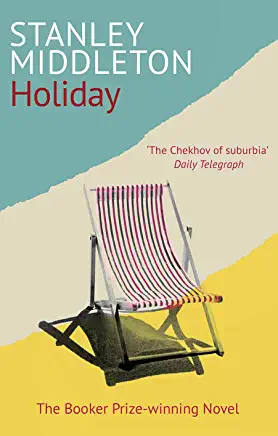
In 1974, the author Stanley Middleton won the Man Booker Prize for his novel Holiday (he was a joint winner along with Nadine Gordimer). Despite this claim to serious literary ability, I’d never heard of him before someone mentioned him on a Facebook site, but I became interested in him during a conversation about novelists from Nottingham (a city only an hour away from where I live).

According to Wikipedia, Middleton was a creative powerhouse – he was a talented church organist and a gifted water-colourist too. He wrote 45 novels, twelve of them before he wrote Holiday. His first novel was published in 1958, the last one in 2010 (a year after his death). He was an English teacher at High Pavement Grammar School in Nottingham for many years. And apparently he turned down an OBE due to believing he shouldn’t be rewarded for doing what he saw as simply his job *.  

I have never read Holiday but it was clearly sufficiently accomplished to be awarded a prestigious literary prize. This was a man of great ability, a man whose literary life was, by most people’s standards, a successful one. Yet I have never heard of him or his most famous novel, and neither have any of the people I have asked.

I tell you this because it has made me think long and hard about this weird activity in which we engage our energies, we writers.  For most of us, whether we are any good or not, and even successful and talented people like Middleton, it is an unrewarding activity, at least in terms of the way most people judge ‘rewards’. Middleton was able to publish his novels, win a Booker and be offered an OBE, but he presumably never achieved the wealth or fame of the handful of contemporary novelists most people have heard of – J.K.Rowling, Robert Harris, Terry Pratchett, etc. Now, around a decade after his death, I suspect that he is generally forgotten, except by those who knew him and those who know his books. Who knows? His reputation might be revitalised in years to come – there have been many creative artists in different fields who were quickly forgotten after their deaths but later ‘rediscovered’. But, for now, Middleton seems to be a relatively forgotten author, despite his success during his lifetime.

Writers like myself, who have had some things published but nothing that has made them any money or given them any fame, would love to achieve Middleton’s success. Forty-five published novels! A Booker Prize! An OBE! Yet most people I speak to who aren’t writers and readers (and that is, in fact, most people) would consider such success to be relatively unimpressive. More obvious worldly achievement is generally better-respected these days (and perhaps always has been) – massive wealth, a name and a face that everyone recognises, books that top the bestseller lists, novels that are picked up by Hollywood and made into movies. There are novelists who have these things even though they are dreadful writers and will probably be forgotten forever after their deaths. There are also, of course, extremely talented writers in this category of the super-successful who will be remembered fondly for many years by many people. But, in today’s publishing world, achieving Middleton’s level of quiet success is a major feat in itself – hell, getting a novel published in the first place is like winning the lottery, and having further novels published if your first one isn’t as successful as your publishers hoped is virtually an impossibility.

In 2006, The Times pulled a stunt that produced some interesting results. They circulated the first chapters of Holiday, and also of a novel by V.S.Naipaul, to numerous agents and publishing houses, presumably using false names. All rejected Naipaul’s novel, and only one agent accepted Middleton’s.  From this, we can assume that publishers in the twenty-first century have different tastes, or know that their readers have different tastes, or are simply unwilling to invest in ‘literary’ novels.

What lessons can we learn from this? Do we give up writing? Is it a pointless waste of time?  I have two thoughts. One is that, if you are a writer, you can’t stop yourself writing – writing is your greatest pleasure (which isn’t to suggest that it isn’t often difficult, painful and stressful) and a writer is who you are, published or not. Earning your living through writing is another thing entirely. The second is that we need to see the rewards of writing, just as we see the rewards of reading, as being different in kind from the rewards of, say, being a solicitor, or a surgeon, or Kim Kardashian, or the founder of Google or Amazon. The rewards are intrinsic, not instrumental. There is something inexpressible that every writer who is serious about their craft has experienced – a feeling of satisfaction in having successfully translated what existed inside your head into something that others can understand if they want to. It is nice if people read what you have written, even nicer if they enjoy it – nicer still if they take the time to tell you they enjoyed it – but, even if no one ever reads it, you still have that profound sense of having achieved something worthwhile, however flawed you feel it is.

The joy of becoming better at something you find intrinsically enjoyable is in itself one of the rewards of taking yourself seriously as a writer. And I’m not even mentioning the myriad rewards of the actual writing itself – the pleasure to be had from putting the best words in the best order, of exploring new worlds, constructing lives, creating characters, getting inside their heads, telling their stories, examining ideas and philosophies and what ifs. The act of attempting to entertain others is profoundly enjoyable. There is a therapeutic quality to writing at times – self-expression, creative contentment – and sometimes a performative element too, a showing off. Few writers are rich and famous, and in fact many barely make a living at all from their writing. Many never give up the day job. But no one would do this activity, which is hard and time-consuming and exhausting, if they didn’t get some sort of deep-seated intrinsic reward.

Some of us might manage to write the novels or stories or poems or scripts that fill our imaginations. Being published, read, performed, admired, or paid – well, that’s the icing on the cake. The sad fact is that most of us are lucky to get even the cake, but sometimes it’s enough just to smell the batter rising in the oven...


* https://en.wikipedia.org/wiki/Stanley_Middleton


Saturday, February 26, 2022

Publication update

2022 so far:

On Thursday 24 February 2022, my poem 'The Artist' was published on New Verse News, a mag which publishes poems responding to current or recent news stories. The link is:

https://newversenews.blogspot.com/search?q=Louise+Wilford+The+Artist


Prior to that, on 2 February, my short story 'Shadows' (a Halloween tale about shadow witches) was shortlisted in the Secret Attic monthly short story competition but didn't win.


My short story 'Basil', about a basilisk about to be born from an egg which is found in a forest by a dog walker, was originally submitted to Honeyguide Magazine under the theme 'Cryptids in their own words'. However, the editor decided it would be better suited to their newly-launched children's magazine, Parakeet, and it appeared in the first edition in January 2022:

https://parakeetmagazine.wordpress.com/


2021:

In 2021, I had several pieces accepted by Makarelle, a new magazine launched by three talented women who studied with me on the MA in Creative Writing course in 2020 (Dini Armstrong, Jane Langan and Ruth Loten).  My poems 'Spill', 'Sheffield May 2020' and 'Watching from my bedroom window' all appeared in the spring edition (theme: Coming unravelled). My short story ‘Tattoo’, about a mysterious tattoo that seems to predict the future, appeared in the Summer 2021 edition (theme: tattoo), and my story ‘Pumpkin’, former winner of the Write Club annual Halloween Competition, and poem ‘Banshee’ were in the autumn edition (theme: Twisted Tales).  The team at the magazine produced an anthology of work from the first year of the magazine, called Makarelle One Anthology, and this included ‘Sheffield May 2020’, ‘Tattoo’, ‘Pumpkin’.

The link to Makarelle is:

https://makarelle.com/


In September, my poem 'Clover' was accepted by The Fieldstone Review for their 2021 edition: 

http://www.thefieldstonereview.ca/issues/issue13-2/clover.html


In August, my story 'The Tall Man', about a man who is chased through a seaside town by a mysterious stranger, appeared in Goats Milk magazine Issue 10:

https://goatsmilkmagazine.ca/?s=Louise+Wilford+The+Tall+Man


My short story 'Seahouses', a tale of a retired art forger, was published in Bandit magazine in July:

https://banditfiction.com/2021/07/01/seahouses-by-louise-wilford/


My poem 'You died in the night' (inspired by the death of a friend) was accepted by Jaden Magazine in May 2021.


In May, my poem 'Flood', written a while back in response to the Sheffield floods of 2007, was accepted by Failbetter magazine:

https://www.failbetter.com/content/flood


Lydia Popowich, who had come across my work during the initial editorial work on Makarelle, invited me to contribute a poem to her own literary blog, ‘The Haar' on The Purple Hermit Blog  (theme: ‘under the mask’). I sent her a poem called 'The picture above your name', about an online friendship, which appeared March/April: 

https://purplehermit.com/2021/04/07/behind-the-mask/


Two of my children's poems, 'Dolphins' and 'Envy' were shortlisted and commended in the YorkMix poetry competition in February 2021.


My story 'Hello, Earthlings' was shortlisted but ultimately rejected by the magazine Diabolical Plots in  January 2021.


I continue to submit work to magazines and competitions. I'll keep you posted about any successes or near-misses I get. 

I am finding that I have had fewer pieces accepted in recent years but I have had far more encouraging emails urging me to resubmit and even offering free feedback, so I see this as a step forward. It might indicate that the quality of editors is improving or at least that the culture is changing. It also suggests that writers generally are upping their game - I have read some exceptional work in mags in recent years and I suspect the plethora of Masters degrees in creative writing, which in many ways I hate, is probably having the effect of improving the quality of literary writing.

 2

Tuesday, February 22, 2022

Book Review: time-filler books I've read this year so far

 The Untold Story by Genevieve Cogman


The Invisible Library series of novels are good fun, imaginative and entertaining. The heroine, Irene, is a librarian at the mysterious Invisible Library (it isn't really invisible, just kind of metaphorically invisible, like Pratchett's Unseen University) - this means she is young, attractive, adventurous, brave, able to fight, intelligent, ingenious and can do magic by using The Language. 
        In previous books in the series (this is the eighth and most recent), she has had various adventures, some amusing, some tense, some scary, and has amassed a small group of loyal friends who help her in her ongoing quests: a Sherlock Holmesian Victorian detective, a dragon in human form (who is also her lover), a fae apprentice. There are also recurring characters such as the fae libertine-archetype, Lord Silver, or her dragon-lover's narrow-minded brother Shan Yuan. One of these characters is the ongoing villain Alberich who was revealed to be Irene's real father in the previous book (sorry for the spoiler), and his story is important in this most recent episode in the series.
        So, what was the book like?  Well, I enjoyed it overall, though as always there was an awful lot of expositionary dialogue, which is true of most stories where lots of explanation is required. It's all very well advising writers to 'show not tell', but you just can't show everything unless you want a book as long as the Encyclopedia Britannica. There has to be those scenes where the main characters get together and discuss what is happening, come up with potential explanations and make plans. There also have to be long passages relaying Irene's inner thoughts (though these do get a tad repetitive, I feel), if only to explain why she makes the decisions she makes. Having said this, the set-piece action sequences are excellent and the plots twist and turn in a generally satisfactory way. I found myself a bit lost here and there, but this is because there is quite a long stretch of time between the books being published and my aging brain can't remember the details from earlier instalments, but I can't be bothered to re-read them all.
        I thought this book was good and I enjoyed reading it. It brings the overall story to a kind of conclusion, so Cogman could leave it at this point if she wished, though there are enough loose ends to attach further stories to if she wanted to do so. I wonder whether the series has run its course and whether it will start to become tediously repetitive if it does continue, however. I notice that Cogman's next novel, not yet available, is called 'Scarlet' and is what looks like the start of a new series based loosely on the Scarlet Pimpernel stories but involving vampires, so maybe she has moved on - I think this is probably a wise decision. Nevertheless, the Invisible Library series is definitely one to recommend to those of you who enjoy lively fantasy, imaginative world-creation, interesting characters, and something quite compelling when you feel like relaxing and recharging.

Rating:   *** [definitely worth a read if you like this sort of thing]

The Shadow Wing by Sarah Painter


This is the sixth book in Painter's excellent series about Lydia Crow, private detective and now head of the powerful Crow family. If you like Ben Aaronovitch's Rivers of London novels, this series will appeal to you as it is set in London and has the same vivid sense of the city's streets and locations. 
     Lydia is a fascinating central character, not always likeable but nevertheless sympathetic, and the novels have an array of compelling secondary characters such as her ghostly house-mate, her sexy police officer boyfriend who might have his own kind of magic, her 'civilian' best friend, her psychotic and incredibly powerful cousin (who is a crucial figure in this particular novel and is genuinely terrifying).
        I think Sarah Painter is an excellent writer - the novels are highly imaginative and appropriately paced, though they do tend to take a while to get going despite her use of striking opening scenes. The dialogue is authentic, the use of magic feels convincing, and the contemporary characters and setting are well-used. Painter's idea of the four magical families (Crows, Foxes, Pearls and Silvers) acting as a kind of checks and balances system for each other is an excellent one, and Lydia's ongoing attempts to unite the families and prevent the worst excesses of their most dangerous members provides an interesting overarching storyline. 
        Painter includes a lot of hints about longer plot lines that extend beyond each individual novel, and sometimes this detracts slightly from the satisfaction of reading each separate story. Fulfilling the competing reader requirements of a satisfying story within each novel and the larger plot that binds the novels together is a very difficult balancing act for writers of such series to pull off, and overall I would say that Painter does this pretty well. Setting the stories in modern-day London gives them an edge over Cogman's Invisible Library series, I think, as it gives them an air of reality and genuine jeopardy. Lydia's experiences are more edgy, gritty and frightening than Irene's, but I imagine the two women would get along with each other very well!

 Rating:   **** [High end genre-fiction]

Doing Time by Jodi Taylor


I have come to this series rather late as Taylor has written three or four novels set in the Time Police so far. I am not a Taylor novice, however, as I read many of the instalments in her series about St Mary's, the time-travelling historians, some years ago. The Time Police series is a spin-off from those books, but can be read without reading the St Mary's novels. However, if you enjoy the Time Police books, you will almost certainly want to read the St Mary's books too.
        I enjoyed the St Mary's books but I abandoned them at a point where I felt the stories were getting a bit confusing and complicated.  Essentially, they are novels about a group of academics who use time-travel to go back to pivotal historical events and check on things. I am sure that it is explained in this series why they don't simply go back repeatedly to put right the many things they manage to bugger up, and various other time-travel paradoxes, but I can't remember the details.  As with Dr Who, I suspect this aspect is simply brushed under the table so we don't think about it too much.
        The thing about the novels that has made them so popular is their humour. They are often laugh-out-loud funny, though they do have some boring passages. In this particular novel, there is a stretch about the arrival of a fourth team member that seems firstly highly implausible and secondly is skimmed over in a way that earlier parts of the story aren't - there is a great deal of telling rather than showing in this section - and I found this a bit irritating. 
    Nevertheless, the historical angle is surprisingly compelling. I assume Taylor does quite a lot of research and I have actually learned things about historical events from the novels. One sequence that stays with me from the St Mary's books is the trip to Troy which taught me more about the semi-mythical battle than the much more academically-sound Natalie Haynes's book, which I read last year, did.
        The tension between St Mary's and the Time Police has been an ongoing theme throughout the St Mary's chronicles, so it is engaging to have a series which shows us this world from the Time Police's viewpoint. Taking three new recruits (all misfits for one reason or another) as their focus, this new series contains all the humour and character-interaction of the St Mary's stories. I enjoyed reading this first instalment, though I did find some of it a little dull.  Taylor is a good writer who has honed her craft throughout the entire series and there is a competence and professionalism about the novels that is admirable, but I think that the endless repetition of essentially the same idea - modern day people visiting times in the past in order to put things right and often messing it up in the process - will almost certainly become tedious and I will probably end up abandoning this series too. Nevertheless, I have to say that, if you enjoy comic fantasy, the books are readable, lively and entertaining.

Rating:   *** [definitely worth a read if you like this sort of thing]


Wednesday, February 16, 2022

Tales From The Bunker THE HONEYMOONERS…

People keep asking me what it’s like being married. Do I feel any different? Has our life been transformed into the apogee of matrimonial nirvana?

Well, frankly, no.

Don’t misunderstand me: I am not seeking an early divorce. P and I are still happy to be together. But the fact is that we’ve been living together since 1993, so it was unlikely that anything about our daily lives would have changed much as a result of saying a few words in front of a badly-dressed registrar. In fact, I was so nervous on the Big Day that the actual vows I made slid past in a blur and I have barely any memory of them – I basically missed the most important part of the entire thing because I was too busy feeling self-conscious and wondering precisely how hideously overweight I looked from the back. What can I say? I’m vain and superficial…


THE BATHOS OF COVID


One thing that has happened since the wedding is that we’ve both had Covid. No, before you ask, it wasn’t as a result of the mixing of guests at the ceremony. We got it about three weeks later. Neither of us was very ill. In fact, it was a bit of an anti-climax – after almost two years of paranoia about this deadly disease, worrying about whether either or both of us would end up in hospital (I am pre-diabetic and fat; P has asthma and another serious health condition), it seemed almost disappointing to just get a bit of a sore throat, an occasional sneeze and a half-hearted cough. We did have to self-isolate, however.

The wedding vows must have had some impact on me, as I remember being very attentive to P’s needs during the first few days of his Covid infection (he got it first). I’m afraid I’m not a natural nurse. I’m more of a natural patient – and I don’t mean the courageous, stoical, make-jokes-in-the-face-of-personal-tragedy ones either. No, I’m one of those whiny, anxious, self-pitying kinds of patient that every medical professional must hate. In our house, it’s me who gets man-flu and P who is the nurturer. But on this occasion the instruction about ‘in sickness and in health’ must have sunk in!

The worst thing about our Covid infection has been the aftermath. We were both excessively tired for weeks afterwards and have only begun to emerge from this fug very recently. I have had definite problems concentrating and remembering things (over and above those caused by my being 58), and I’ve had what I will euphemistically refer to as an ‘upset tummy’ on and off ever since I tested positive (though it might be due to excessive consumption of the sort of food a pre-diabetic person should never eat, over Christmas and then continuing into the New Year because I needed something to cheer me up as I had Covid…). I have also had the ‘phantom smells’ reported by others, though not consistently or continuously. We went to a French restaurant with my sister and her partner last week and the whole place smelt like sewage to me – I kept wondering whether the toilets were backing up, but my companions reassured me that all they could smell were pleasant foody smells, and it did wear off, fortunately!


MILLIE MAKES HER MARK!

We both have birthdays in the weeks after New Year, so they were rather muted this year. However, they did give my mother-in-law the opportunity to indulge in what is clearly going to be a long-running joke: writing ‘To The New Mrs B- from The Old Mrs –‘ on my birthday card (she did this on my Christmas card too).

Speaking of which, the mother-in-law (whom I think I will refer to as Millie from now on – M for Mother, I for In, L for Law), was rushed into hospital on the evening of the first day of P’s isolation after she developed severe abdominal pain. Well, I say ‘rushed’ – in fact, she waited, with a neighbour who is in her seventies, more than three hours for an ambulance from the hospital which is literally ten minutes away from her house.

You can imagine how worrying this was for P who couldn’t drive over. She was then kept in A & E for eighteen hours until they found her a proper bed in a surgical ward. It turned out she had gallstones and they kept her in for four days for observation, but decided not to operate.  Despite this trauma, Millie actually appeared, afterwards, to have enjoyed her stay in hospital, and at least it meant P didn’t have to worry about not being able to visit her during his Covid incarceration, as he knew she was being looked after.

On one of his phone calls to her, she told him cheerfully that she’d just had a ‘lovely lunch’, though she had to ask the nurse what it had actually been:

MILLIE:  ‘I think it was chicken, wasn’t it?’

NURSE: ‘You had a cheese omelette, love.’

Millie has never eaten an omelette or had cooked cheese in her life – if we had offered her such a thing at any time, she would have spurned our offer as if it was toasted turd laced with belladonna. But in the hospital, she ate and enjoyed an NHS cheese omelette (though she thought she was eating chicken).

She had several culinary adventures while in hospital:

MILLIE [describing her experience to her elderly neighbour]:  ‘Ooh, I had something foreign, you know.’

NEIGHBOUR:   ‘Really? You, eating foreign food?  What was it?’

MILLIE:   ‘Oo, now let me think. What did they say it was called?  Hang on, give me a minute. Oh, yes, an egg mayonnaise sandwich.’

She must be the only person who feels like a four-day sojourn in a provincial hospital is like a weekend away in a spa, and who misses hospital food once she’s left!

She rang me this morning to tell me that she’d received ‘two letters for P’ but she couldn’t tell me who they from ‘on the phone’. She clearly suspects our landline is bugged. Probably all those journalists trying to find out where she buys her overalls. She’s paranoid about ‘criminals’ somehow finding out her business and exploiting her data. She hates it, for example, when I put a sender’s address on anything I send her through the post, though I’m not sure what she thinks criminals would be able to do with my address, which they could easily find out from the envelopes of any letter sent to my house.  Anyway, her phone call this morning made me wonder whether she and P were both members of a spy-ring or secret society.

She added, in her charmingly random way, that a police drug raid at a house further down her cul-de-sac this morning had broken up her morning pleasantly, and that she had really enjoyed the trifle I made for her at Christmas and wanted another asap.

Clearly, getting married has made my membership of the family official.

BOOK REVIEW: What I've been reading in 2022

Klara And The Sun by Kazuo Ishiguro

Prior to reading Klara and The Sun, I had read two novels by Sir Kazuo Ishiguro, the Anglo-Japanese, Nobel prize-winning author of novels with such irresistible titles as A Pale View Of Hills and An Artist Of The Floating World. The first was the stunning The Remains Of The Day, which I read after seeing the equally excellent film version starring Antony Hopkins. Much more recently, I read Never Let Me Go, also made into a very good film (starring Carey Mulligan and Keira Knightley).


    A year or so ago, I read a fascinating conversation between Ishiguro and his friend Neil Gaiman about the way fantasy is viewed by the literary establishment, which explored among other things why fantasy is often viewed with such snobbish disdain, as if it should be fenced within a generic compound labelled 'books about wizards and stuff for the feeble-minded'. It has long been a source of bemusement to me that well-read folk of my acquaintance are so condescending about 'fantasy' and so contemptuous of it. After all, these literary types presumably hold A Midsummer Night's Dream or Gulliver's Travels in high esteem. They don't seem to dismiss Austen's novels as simply girlish romantic fantasies, or the Bronte's work as merely the fervid gothic imaginings of three isolated and over-imaginative sisters running about on the North Yorkshire moors (well, yes, in reality, they often do - and in Austen's case it is only her ascerbic wit and ironic tone that helps her rise in their estimation beyond the dual nadirs of 'chick-lit' and 'humour'). 

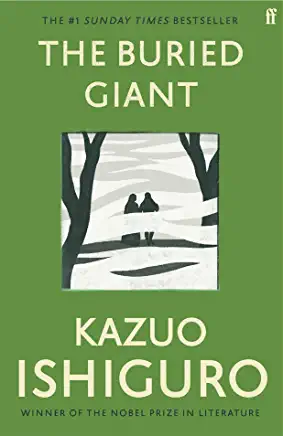
In reality, the fantasy genre, just like the sci-fi genre (Ishiguro's latest works straddle the two), is a huge umbrella term for a vast range of writing, much of which is most definitely 'literary'. On one level, every novel ever written is in the genre 'fantasy', but people often hear the word 'fantasy' and immediately think of dungeons and dragons, Tolkeinesque elves and orcs, and children's novels (many of which are among the best books ever written). They associate it with childhood, with cliche, with simplicity, when in fact there are hundreds of fantasy novels that are very far indeed from these things. Critics have apparently felt uneasy by the fantasy elements of Ishiguro's most recent novel, The Buried Giant - Never Let Me Go and Klara And The Sun both fit into the category of fantasy's slightly more respectable cousin, science fiction, so have escaped the worst of this knee-jerk prejudice, but they still have their detractors.
Like several other ‘literary’ novelists such as Margaret Atwood and Kate Atkinson, Ishiguro has become increasingly interested in fantasy as a genre and his recent novels have been fantasy/science fiction narratives. There are people who find it difficult to accept a writer producing work in different genres – like the outrage over Bob Dylan moving on from acoustic to electric, or the inability to accept actors associated with one role when they move onto a different one, this attitude is narrow-minded and silly, though understandable. People like to categorise others and we don’t accept change easily (at least initially). However, these days it seems to be much more common and much more acceptable for artists of all kinds to try their hand at all sorts of things, and experimentation is at the heart of creativity, whether it is The Beatles experimenting with music from different cultures or Barbara Hepworth using different media in her sculptures. It is also possible to argue that Ishiguro’s early work had a distinct fantastical element, and that he uses his exploration of fantasy and science-fiction to make profound points about life, just as all his novels do.
Klara and The Sun is narrated by Klara herself. She is an artificial life form, humanoid, highly intelligent, and created to be a companion for a child. This decision to write from the perspective of a non-human being is not new, but it gives the novel’s narrative style a simplicity which is actually quite refreshing. There is a clarity and generosity about Klara’s ‘voice’ which both charms and frustrates the reader. She is an observer who observes the people around her in minute detail, often with great incisiveness, but she also misunderstands situations due to lack of information (Ishiguro is a master of the unreliable narrator), and she is a product of her programming.  The story concerns her relationship with an isolated and ill human girl, but to tell any more would give away too much of the plot – the narrative is actually fairly thin, though beautifully-paced and satisfying in its own quiet way.
At first, I found the novel a little flat and slow, but Ishiguro includes enough hints at mysteries to be resolved to keep the reader’s attention (though readers who like more conventional, generic sci fi and fantasy might feel a little cheated by the quietness of the plot). I read this novel back in early January, and it has proved to be one which lingers in the mind, raising questions about what it is to be human, about the duality of soul and body, the nature of belief, and the purpose of existence. It is a poignant novel with a number of similarities to Ishiguro’s earlier Never Let Me Go, not least the relatively naïve narrator.

RATING:  ****  [well worth reading]